Share teams and couples gather Institute to monitor the Participatory Strategic Planning

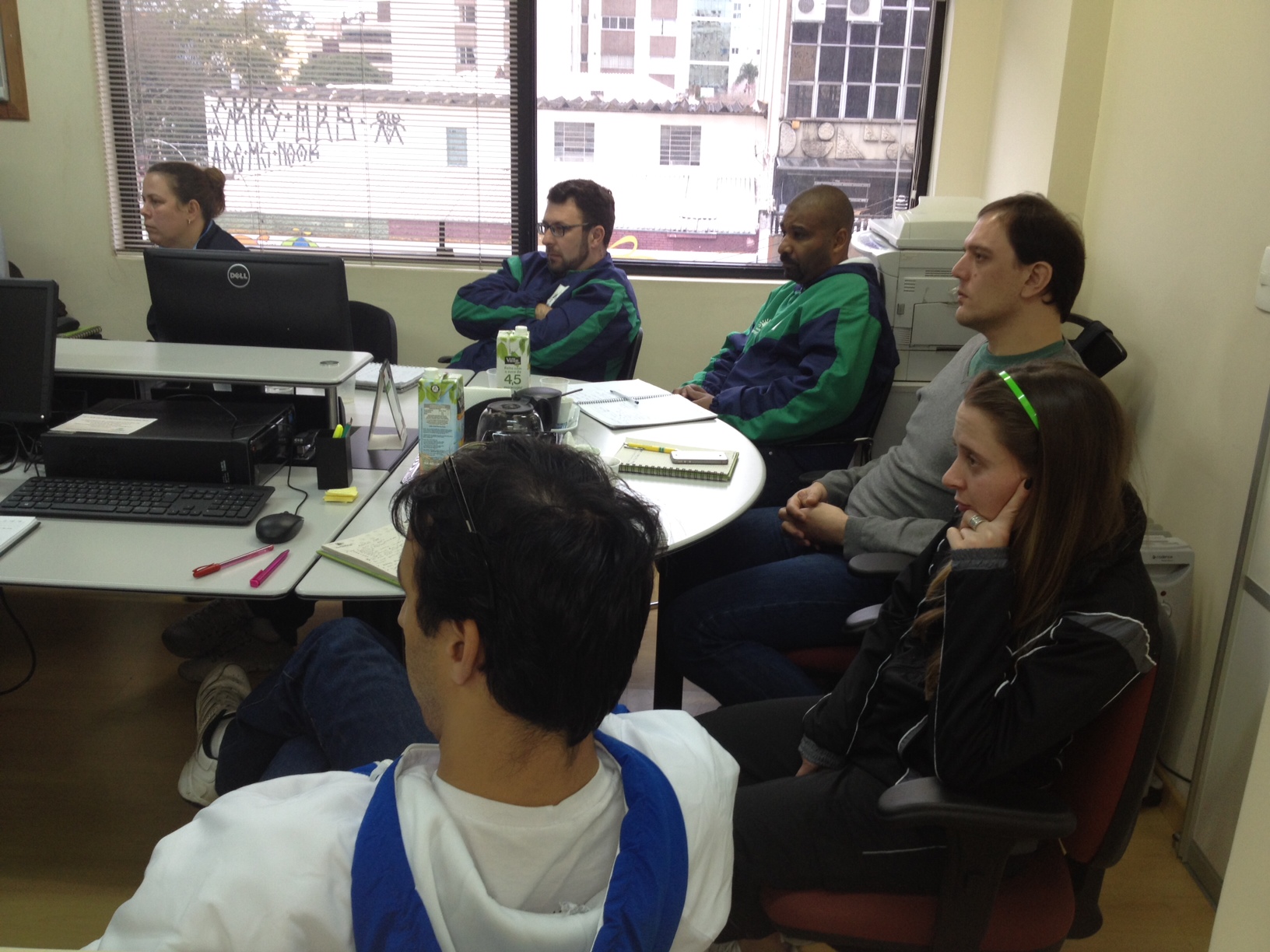
At a meeting in the office of the Institute Share, team reviews the news of PEP.

On Wednesday, August 13, eight people from the administrative staff of the Institute Share who participated in the drafting of the Action Plan Participatory Strategic Planning (PEP) of the institution in February met with the couple, management consultancy, in Curitiba to discuss the results already achieved. The meeting took place in the administrative office of the Share and consultants took the opportunity to know the project of the Central Core Initiation Volleyball Nuclei in Parana and see, in practice, the Methodology Share Initiation Volleyball.

At the end of 2013, the Share Institute started the PEP process in order to improve what is being done and think of new challenges. Between October and December we were done research on internal staff, partners and leaders of society for creation of internal and external diagnostics. Then, in February this year, through much discussion mediated by the couple, the Action Plan was established for 2014 and 2015.

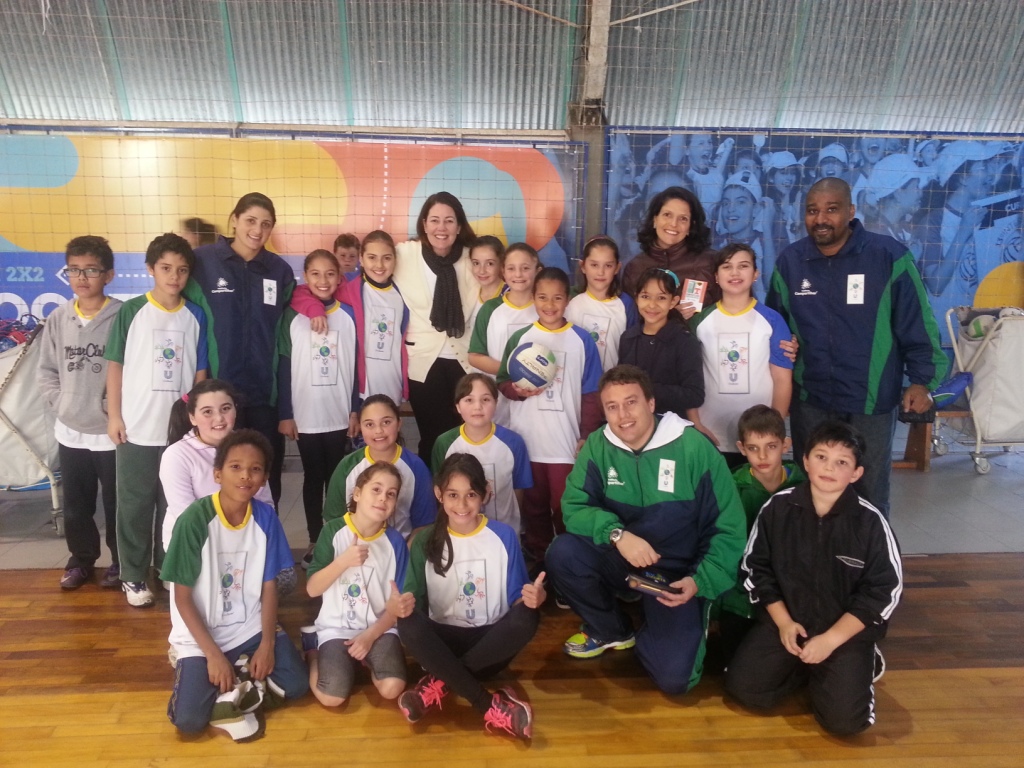
In the Central Core, consultants Marina de Oliveira and Cristiane Fornazier were received by the students, Alexandro Martins and Rosana Rocha teachers in addition to the pedagogical project coordinator, Josmar Coelho.

Since then, leaders from all walks of Share work focused on completing actions so that the objectives and goals are met. The Follow-up Meeting motivated even more participants who received a positive response from the pair as the completion of actions and evolution of the Institute Share.

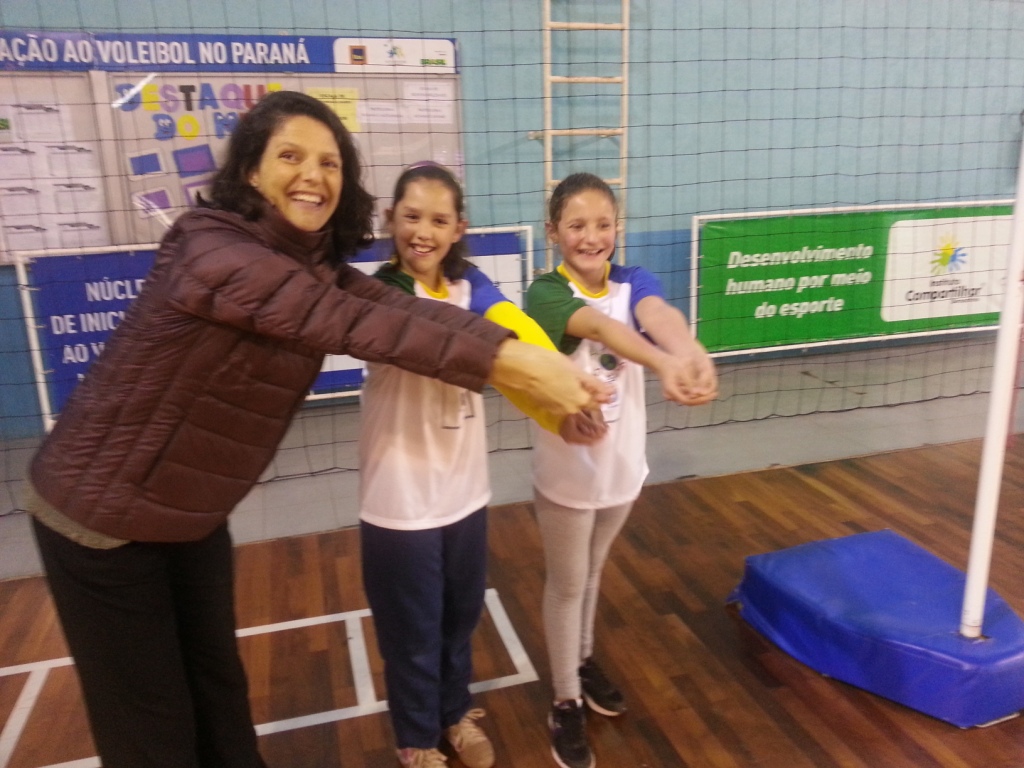
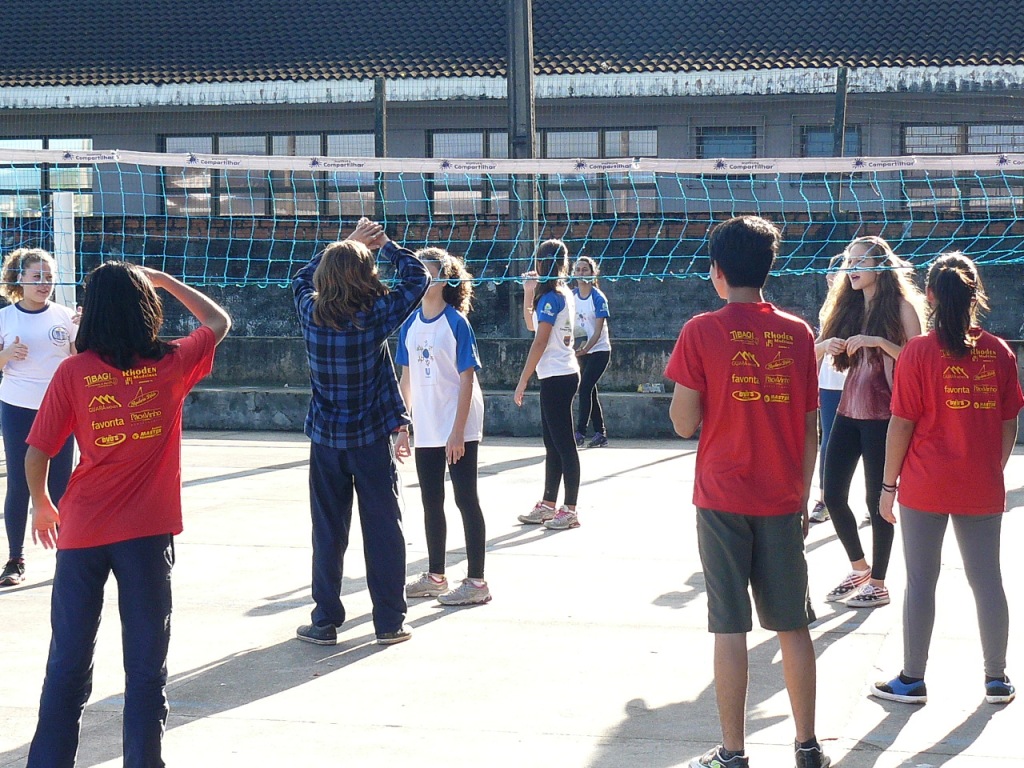
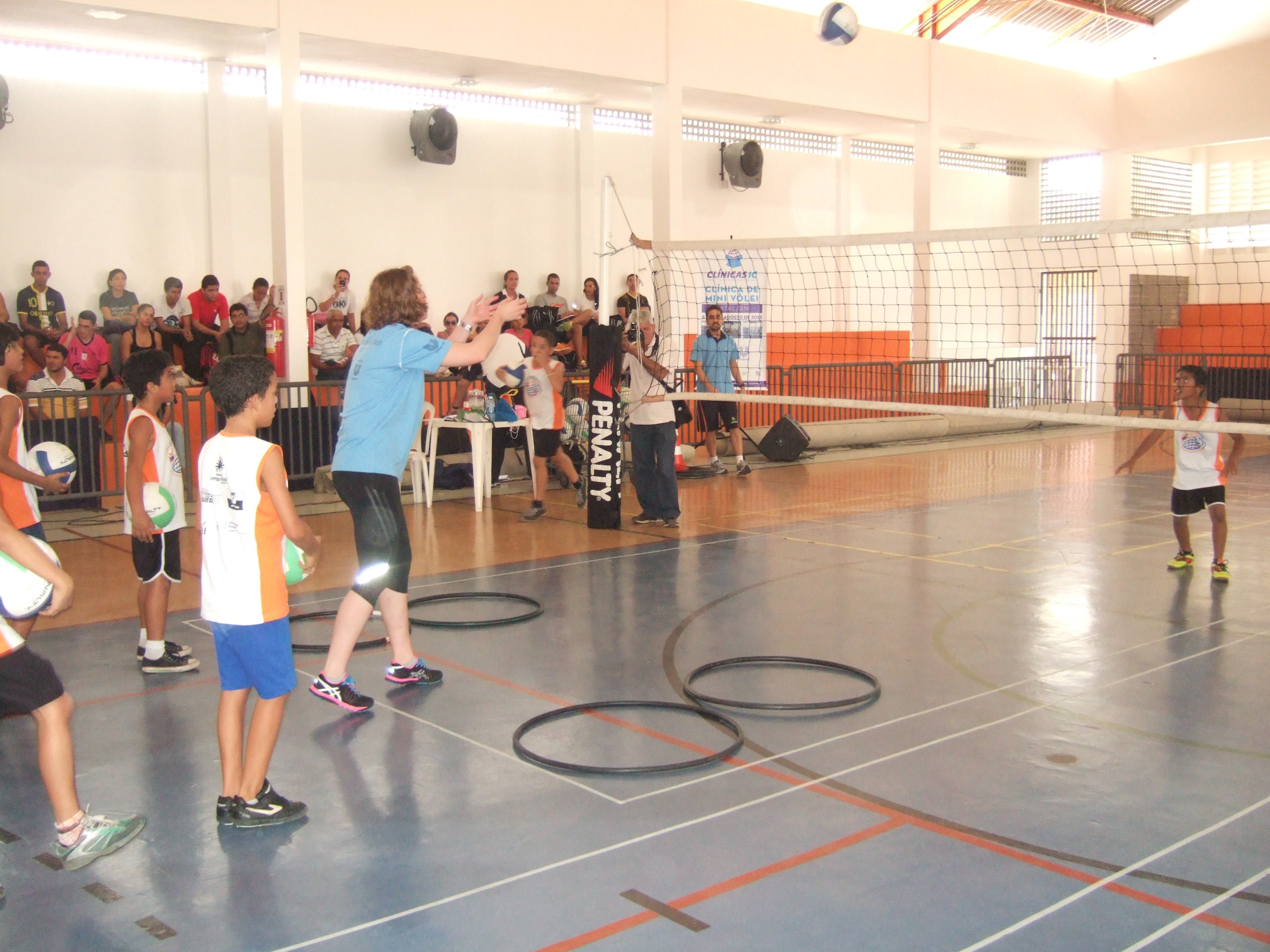
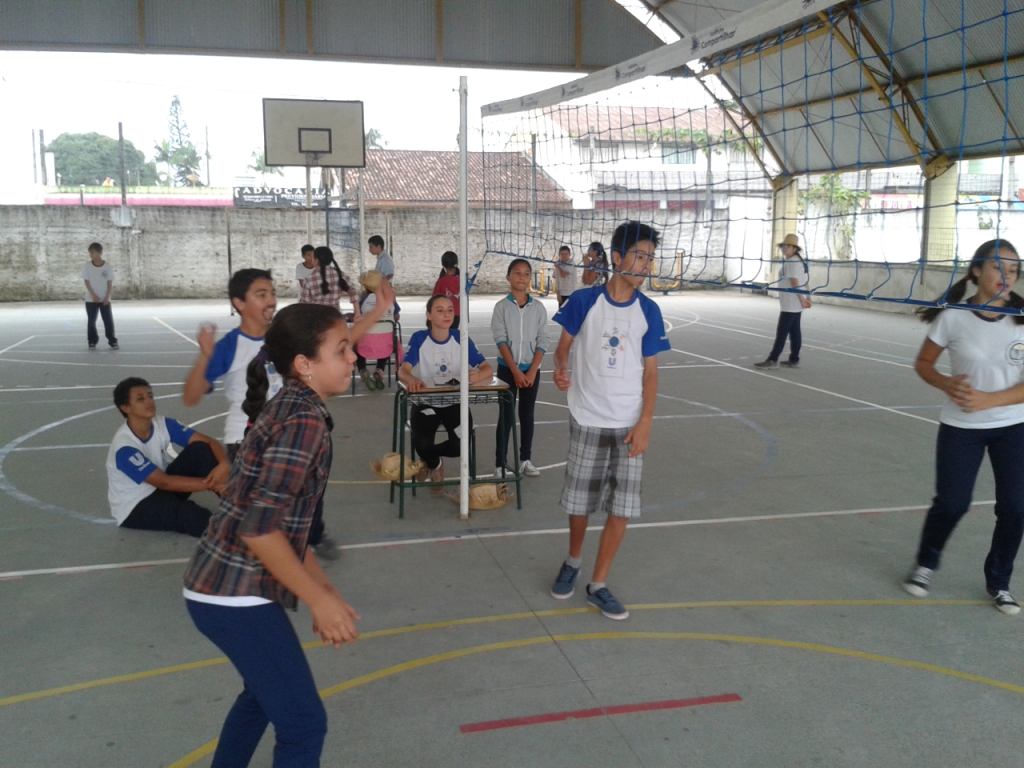
In the afternoon, Marina de Oliveira and Cristiane Fornazier couple were received by the Central Core pedagogical coordinator of the project, Josmar Coelho, who presented the class structure and some even risked volleyball fundamentals. There, the students taught the consultants some key points of the methodology and they saw how the values ​​are worked out at all times of the class. "I loved visiting the project. It makes much difference when we know more closely. It was really cool to interact, even slightly, with children and mothers, "says Cristiane.

Students teach volleyball fundamentals to consultants.

Photos: IC Disclosure and Pairs

In Guaratuba, students of Launch Centers project to Volleyball in Paraná have fun with colleagues who practice athletics

Play fun event participants "No matter the sport, the important thing is the movement."

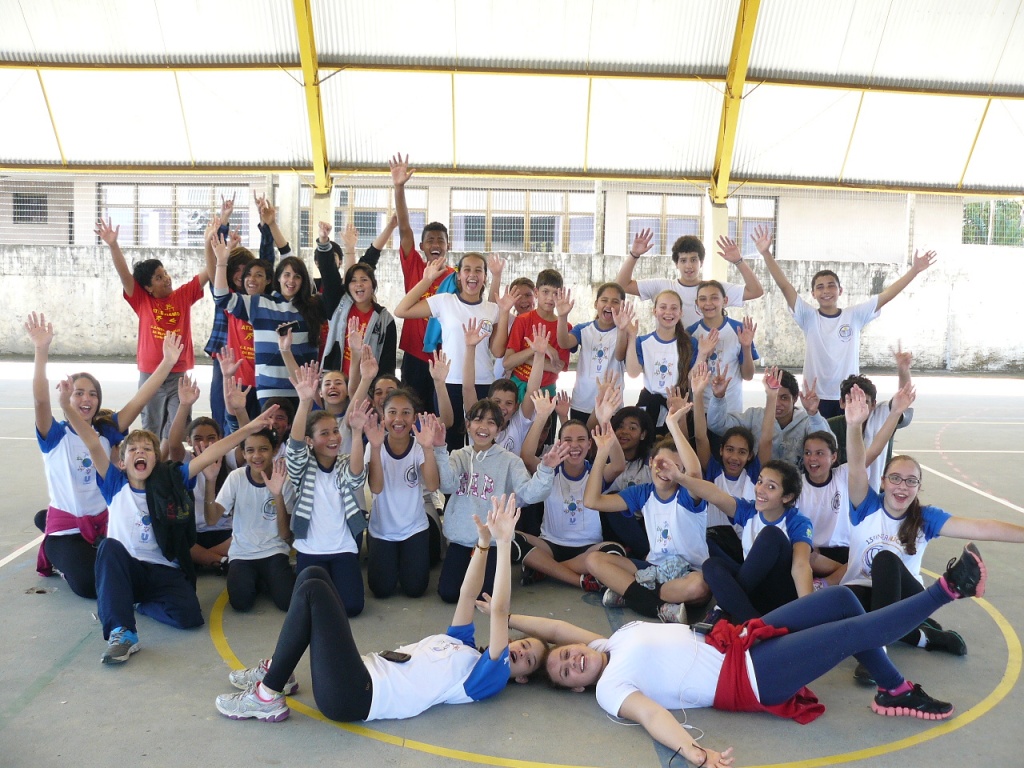
"No matter the sport, the important thing is the movement." This was the event theme performed by a physical education teacher, Cassia Graciotto to their students the project Initiation Centers to Volleyball in Paraná - Share the Institute - and the Athletics Project, both based at State College Joaquim da Silva Mafra, in Guaratuba. The meeting between the kids took place on August 2, Saturday as happened games, recreational activities and games that contemplated the two sports. The mood was joy and integration among participants.

In addition to encouraging physical activity, the purpose of the event was to unite children and adolescents so that they could know a little of the reality of each project and also stimulate reflection on the importance of sports. Thus, at the request of the teacher, the students formulated phrases that answered the question: "Sport? for what?". Cassia liked enough of their involvement with the exercise and at the end of the meeting awarded four students who had the most voted phrases for themselves. "I was delighted with the phrases", said the enthusiastic teacher. During the event, Cassia also reinforced the values ​​cooperation and friendship, taught during their classes.

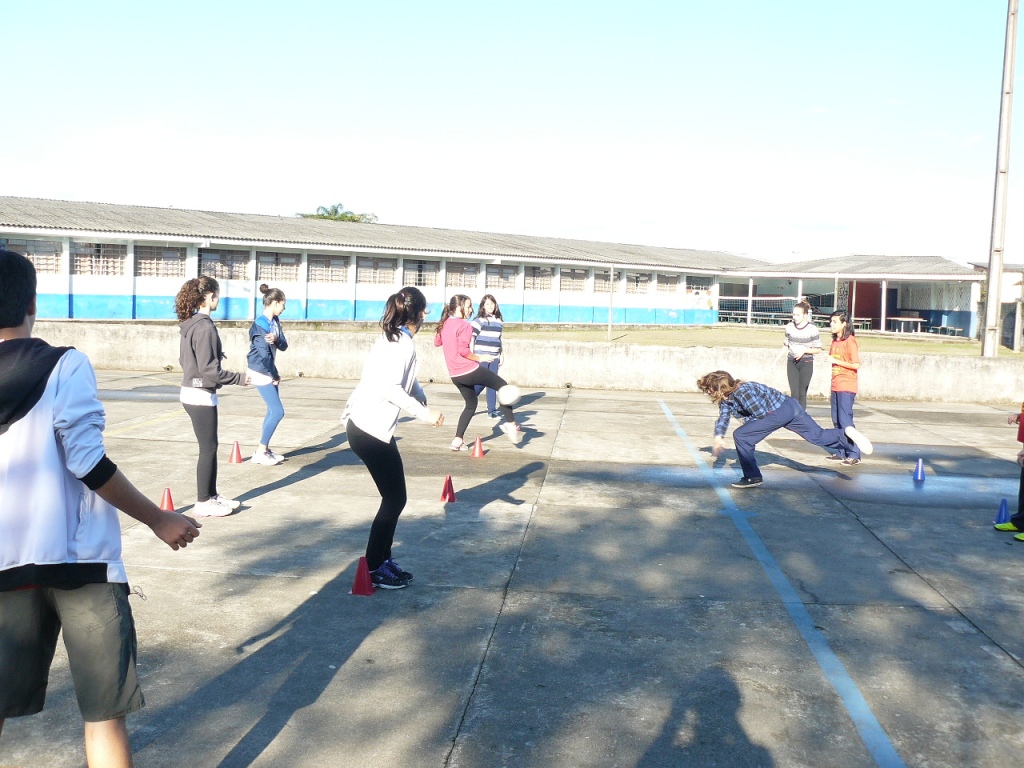
Project Initiation students cores to Volleyball and Athletics Project have fun together in the volleyball courts.

To heat, children and adolescents began the practical activities and relaxed way with race, games and fun. Then they went to the volleyball courts of categories Mini 3 × 3, 4 × 4 and Mini Volleyball, where they played several matches of the sport and even assisted in the arbitration of the games. On that occasion, the kids Initiation Centers project to Volleyball in Paraná seized to provide colleagues Athletics a different experience. "Sport is very important to me, always practicing hope," said the student athletics, Vanil Gabriela dos Santos.

Alongside the games going on other activity. A very similar joke to "hunter" but with use of cones, students Athletics love. Children and adolescents participated in volleyball and had a good laugh with colleagues. "The activity so pleased that formed the queue!" Said Cassia. After stopping for lunch, the participants of the event learned who were the winners of the best sentences. The moment was enough anxiety and joy.

Event provides integration and exchange of experiences among children and teenagers practitioners of different sports.

The message created by Anna Beatriz Lobo, 13, the Volleyball category, was elected by peers, teachers and school officials as the best. She wrote, "the sport is not only to be practiced but sense because what good do something if it is not to love? Sport is not just an excuse to get out of the house but a way to interact. So do not judge him before knowing the true importance and the true meaning he has. " Ana won the teacher a pizza from a restaurant in town and celebrated the victory along with her friends. Colleagues responsible for the other top three phrases won bonbon boxes.

Finally, Cassia handed a souvenir students a magnet made with clothespins and created for herself. Through a survey, the teacher found that everyone liked to unite the students of the two projects at the same event. The math teacher school, Jeferson da Silva, was also there: "Who would say, sabadão the morning and we here hitting a ball with students and alumni. The project brings us just like a warm hug, "he said pleased.

Partners of the Interior Cores / PR: State Government of Paraná and Unilever. Via Federal Law Sports Incentive: Unilever and Sports Ministry.

Photos: IC Disclosure.

President of Brazil Kirin and coaching staff of the men's volleyball team of Campinas / SP visiting core project Volleyball Network

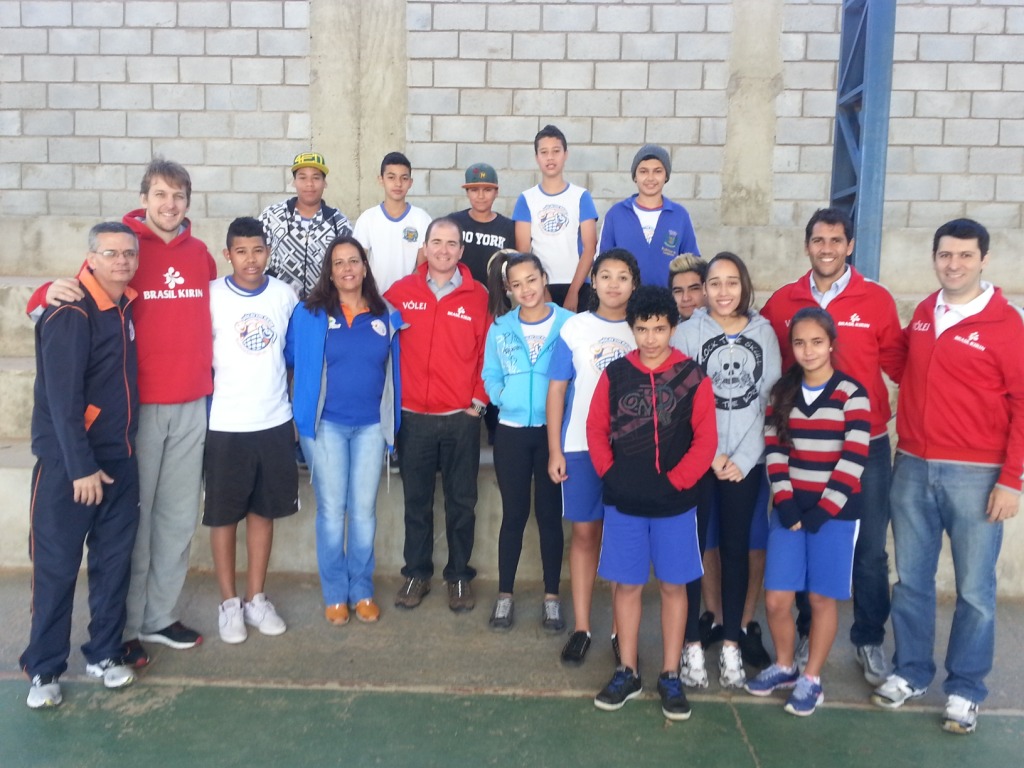
Núcleo São Domingos do projeto Vôlei em Rede recebe visita do presidente da Brasil Kirin, Gino Di Domenico, e da comissão técnica da equipe masculina de voleibol de Campinas.

A visita especial do presidente da Brasil Kirin, Gino Di Domenico, e da comissão técnica da equipe masculina adulta de voleibol de Campinas surpreendeu a garotada do projeto Vôlei em Rede, Núcleo São Domingos. O encontro com os alunos aconteceu no dia 21 de julho e foi uma oportunidade para conversar sobre o projeto e a importância da prática de esportes. O embaixador da equipe, Maurício Lima, e o coordenador técnico, André Heller, ambos ex-atletas e campeões olímpicos, ainda jogaram algumas partidas de voleibol com os alunos. O supervisor Fernando Maroni também estava presente e acompanhou tudo de perto.

Além de patrocinar a equipe de voleibol de Campinas, a empresa especializada em bebidas também apoia os Núcleos Campinas/SP do projeto Vôlei em Rede do Instituto Compartilhar, situados em escolas municipais da região. Para o professor Ivanir Giovanoni, o encontro foi bem positivo. Ele ressaltou a participação do presidente da Brasil Kirin e afirmou: “ele foi muito atencioso com todos na escola”. Ivanir também considerou importante a troca de experiências do esporte dentro das quadras.

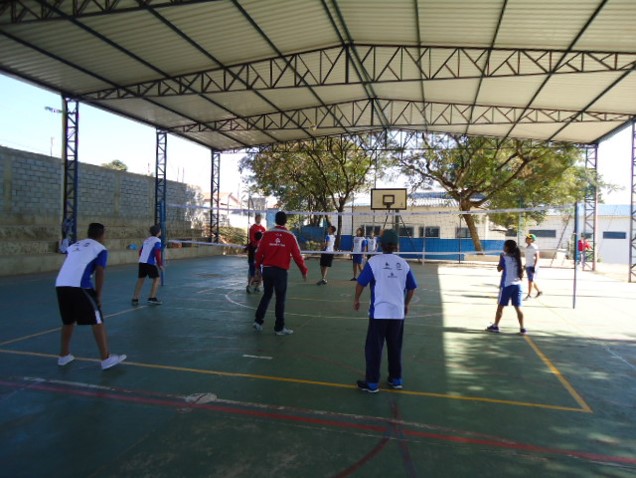
Maurício Lima e André Heller, ex-atletas e campeões olímpicos, se divertem com os alunos.

Para os adolescentes, o momento proporcionou situações únicas e muita diversão. “Os jogadores são muito grandes. Como é que eu consegui jogar com eles?”, se perguntou o aluno Anderson Filho, 13 anos, da categoria Vôlei. O colega de turma Pedro Rodrigues, 13 anos, também ficou admirado com o tamanho dos atletas: “a primeira bola que eu cortei, já levei um bloqueio. Assim não dá!”, desabafou. Ao final, os alunos ganharam brindes da Brasil Kirin, minibolas de voleibol.

“É muito bom poder contar com a visita do presidente, que tem uma agenda super complicada! Além de motivar a todos, é um sinal da importância que o trabalho do Compartilhar tem para a empresa”, ressaltou o gerente executivo do Instituto Compartilhar, Luiz Fernando Nascimento.

Fotos: Divulgação IC.

Friend of the day yields fun activity at the Center Guaratuba / PR

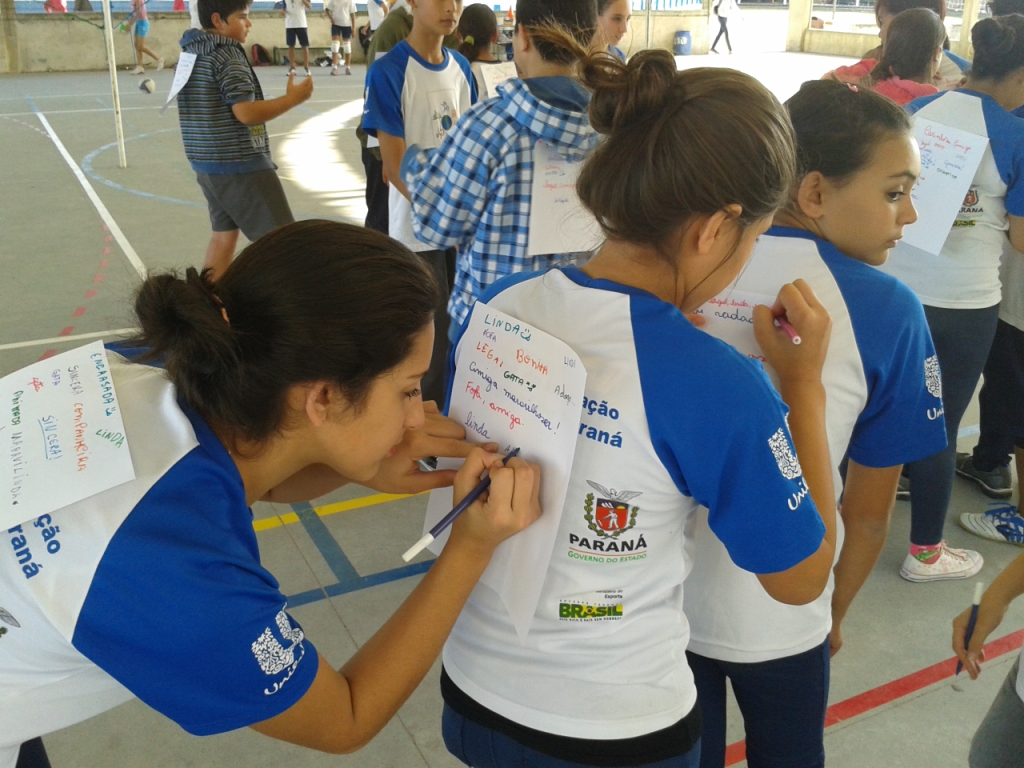
Day Friend: students Nuclei Initiation Volleyball in Paraná project to write the main positive qualities of colleagues.

The Friend's Day, celebrated in Brazil on July 20, was not lost on the project Guaratuba Core Initiation Centers to Volleyball in Paraná. The teacher Cassia Graciotto took the special date to perform an activity values ​​on Monday, July 21. About 40 students participated in a chat and joke about friendship and liked a lot.

Gathered in a circle, Cassia began a pleasant conversation with the kids about the importance that friends have on people's lives. Together they concluded that it is essential respect for differences and defects of companions in friendly relations, as well as recognition of the qualities.

Activity provides surprises and fun.

During the chat, the teacher said that friends may change over time as they mature and begin to see things in other ways. He also said that many remain for life and told his students who have been friends for 25 years. Coincidence or not, they met at school at the age of 12, playing volleyball, as well as the kids of the project.

Then students were given sheets with double-sided tape and helped to stick them on the back of each. Their mission was to write papers in peer quality that called more attention to them without them to see, in order to recognize the positive characteristics of the participants. "The activity was more motivating than I thought! Everyone was excited to be able to write about their colleagues and curious to know what they wrote about them, "recalled Cassia.

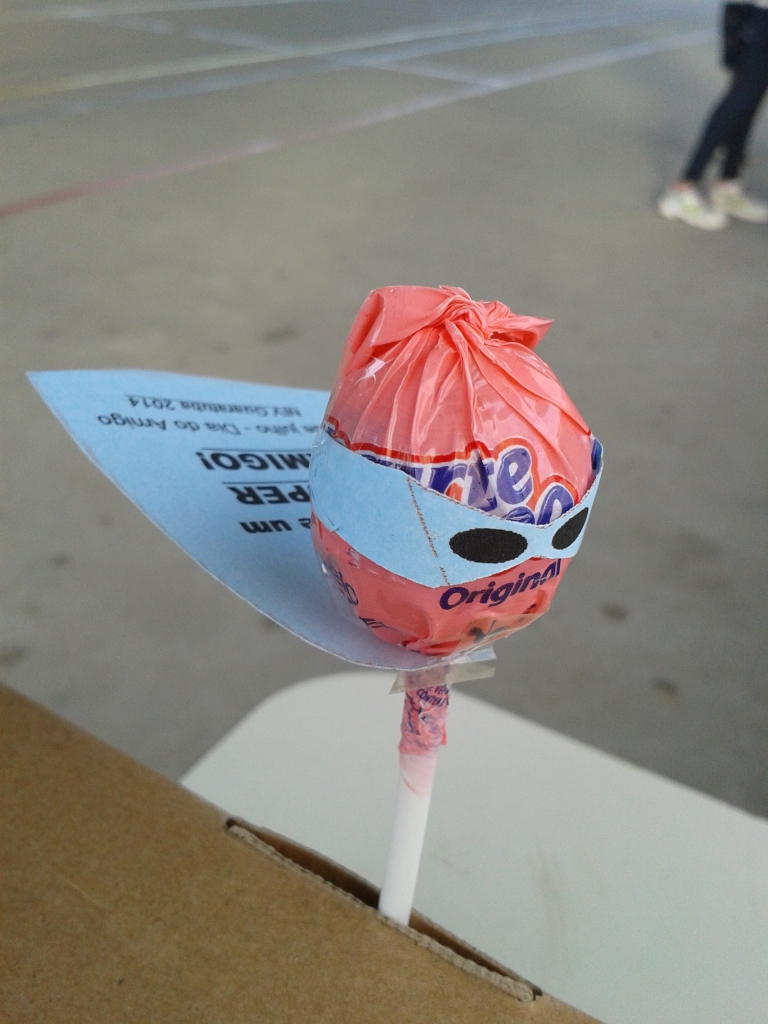
Professor Cassia Graciotto delivery lollipop superfriend to the celebration participants.

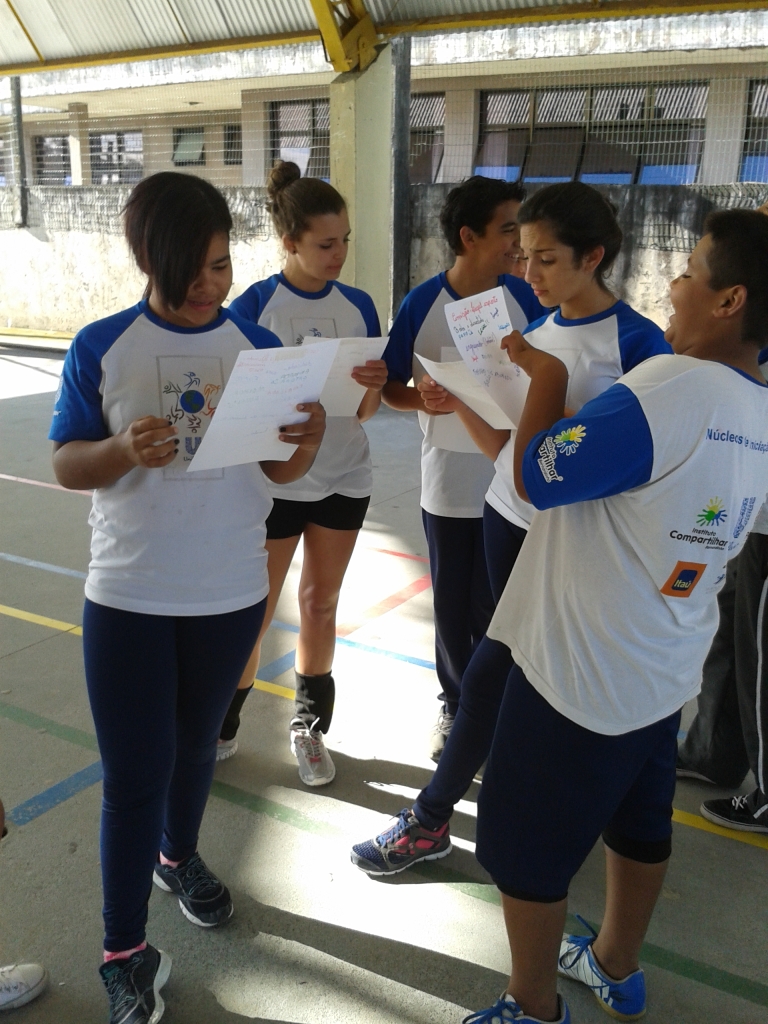
The game earned more relaxed conversation, when the teacher explained a little about other value practiced in class, self-esteem. At the end time of the activity students read what colleagues wrote about them, they gave lots of laughter, made expressions of happiness and surprise.

The sport provides integration, fun and friendship among children and adolescents and this was evident in the celebration of the Friend Day Guaratuba Center. As always, the teacher Cassia Graciotto was creative and dedicated and delivered to their memories and creative students: lollipops decorated Superfriends.

Partners of the Interior Cores / PR: State Government of Paraná and Unilever. Via Federal Law Sports Incentive: Unilever and Sports Ministry.

Photos: IC Disclosure.

Education at stake: in addition to doing good for health, sport can help both in social relations and in the development of values ​​and self-esteem

Manuel Evaristo lived in a house of wattle and daub covered with coconut straw in the interior of Rio Grande do Norte. I slept on the network and to help with expenses, selling coconut candy. In a street race without training or fitness, the boy of 11 years of bare feet caught the attention of Magnolia Figueiredo, RN Olympic champion in athletics, who then tried to get him to train professionally in Natal. Manuel Evaristo grew, became champion was Brazilian medalist in athletics and today, at 49, is dedicated to rescuing young people from the streets of Brasilia. "If not for the sport, I was even alive," says the coach, who do for others what one day someone did for him.

Ahead of the Institute Joaquim Cruz, Evaristo has trained about 250 athletes, it changed the fate of teenagers living in delinquency and vibrates to see a kid who was armed now studying and working. "Sport is a simulacrum, a great analogy of life," says Renato Miranda, professor of the Faculty of Physical Education and Sports of the Federal University of Juiz de Fora and athletes consultant. Author of two books on human performance through sports, he says that the attitude of the educator is crucial, highlighting the knowledge, authority, education and self-discipline, qualities essential for obtaining good results in any matter.

Former coach of basketball and retired professor from USP, Dante De Rose Junior points out some lessons that the teacher can learn from sport. "Often, the teacher of the classroom does not open for students manifest" he says. "In sport there is authority, but exercise authority does not mean being authoritative. I see teachers demanding respect when, in fact, has to be won, "he concludes.

A team game
Master in pedagogy of human movement from the School of Physical Education and Sports, USP, Paula Korsakas explains that the practice of sport can help in education because it is imbued with values, ethical and moral codes. However, it is not an automatic relationship, but something that is built over a lifetime. "If sport, in fact, had the ability to educate themselves, we would only examples of citizenship among athletes, but we know that is not the case," he says.

In the coordinator of the Human Development Programme for Sport (PRODHE), USP Sports Center, Paula puts into practice reasons based on studies and research, which consist in sport use as a learning tool and development of self-esteem, with an approach supported by the Organization of education pillars of the United Nations Educational, Scientific and Cultural Organization (UNESCO): learning to know, to do, to live with others and to be.

In PRODHE, an initiative to 120 students 8-16 years, teens have the autonomy to organize tournaments, make commitments, control and justify their absence. There is a concrete system in which they experience the causes and consequences good and bad behavior. "Everything is lived," said the coordinator. "So, we built a system in which they realize the importance of values ​​for social organization," said Paula, considering an error of traditional education believe that the development of conduct and social relations are constructed from speeches and moral lessons .

On a trajectory of 19 years of work, with technical partnership of Instituto Ayrton Senna, the PROHDE has become a reference center on the theme, with strategic role to systematize, disseminate knowledge and train teachers, factors that led the program to be part of methodological advice of the Sport for Social Change Network (REMS), an organization that brings together over 50 institutions with a commitment to work the sport in favor of human development.

Living and learning to play
Among the entities that comprise the REMS is the Institute Share, designed in 2003 by Bernardo Rocha de Rezende, known as the technical Rezende of the Brazilian national volleyball. "Rezende always believed that the great transformation happen in school," said Luiz Fernando Nascimento, Nando, executive manager of the institute. Based on this belief, they have designed an innovative strategy and led the volleyball to public schools, with classes in contraturno and the involvement of teachers from their own school system. "We wanted the school to be recognized as the cell transformation," says Nando.

Point to them: the plan worked and today the Share operates in several states (Rio Grande do Sul, Paraná, São Paulo, Rio de Janeiro, Minas Gerais and Rio Grande do Norte), it has 41 cores and serves approximately 4000 children and adolescents. Not only are students who gain from this initiative. Over the 11 years of existence of the institute, Nando notes that the practice of volleyball in the format developed by them, infects the classroom teachers, the way schools and families, who are surprised not only with the performance of students on the court, but also with new patterns of behavior that are reflected in other environments. "Our project is much more than playing ball," said Nando. "We use sport as a backdrop to teach win, lose, take risks and make decisions, tasks that are difficult to perform in real life."

Those who live with Michael Jackson Jr., 15, realizes the changes. He was aggressive, problematic in and out of the classroom, without any control. "I knew he lived in a situation of risk," says Luciene Rodrigues Soares, educator and retired deputy director of the Municipal School Monsignor Joaquim Honorius in Natal, Rio Grande do Norte, where she met Michael. Two years ago, realizing that he liked sports, Luciene invited the boy to go to the institute. He accepted immediately and was received by Professor Simplício Silva, who, although facing an unruly boy, welcomed him and gave him responsibilities.

Michael realized it was so nervous that came into tears of anger and fought, especially when called by nicknames. "Offended me so much that I did not want to go to school and went to disapproved by faults," says the boy, whose attitude has changed and, as a result, stopped swearing. Today it has self-esteem, helps his grandmother in the affairs, on the side helps your Ernani, who owns a paint store or make supplementary (is entering the 7th grade), dreams of studying letters, because like the American music, and attends the Institute thanks to the dedication of Luciene, who leads weekly classes. Retired educator still oversees Michael studies, advising him and accompanying him in every way. "Helping these kids it is still teaching," he believes.

More than one exhaust valve
In Reaction Institute, association also created in 2003 by the judo medalist Flavio Canto, in the community of Rocinha in Rio de Janeiro, it is common for mothers, guardianship schools or agencies to forward teens to the program due to bad behavior. "This kind of thinking shows that parents and educators are aware that the sport helps," explains Joan Steps Miraglia, psychologist and coordinator Executive Institute. To train high performance athletes, many seek the reaction in order to see the children winning in life through sports. Just as with Rafaela Silva, who was born in the City of God, he stepped on the mats Reaction to eight years and, after much struggle, got the title of first female world champion in judo in Brazil.

The figures, however, prove to be champion is not for everyone. Among thousand students enrolled in the institute, seven are part of the Brazilian national judo. For Flávio Canto, however, the ultimate goal is to transform lives and build winners off the mat. Therefore, the institute balances technical and tactical exercises of the sport with human development activities. Joan Miraglia see in judo a privileged instrument to work full education, to have traditional valuation principles, respect and discipline.

Currently, the institute is housed in five needy poles of Rio de Janeiro and meets success stories. The psychologist remembers John Lucas, a boy who had two dreams: to build a room for parents, as he slept in the room with them, and be a lawyer, aspiration which replaced the goal of being a janitor like his father. Today he celebrates the renovation of the house and the entry into law school. Who enters the institute participates in art workshops, science and technology. Students who excel have a chance to scholarships at schools and private universities. "One of our challenges is to promote interaction between social classes through sport," said the coordinator. "That way, we also fight against inequality", he believes.

While that sports can be a powerful tool of integration, sociability and personal development, Felipe Pitaro, pedagogical coordinator of the Gol de Letra, NGO created in 1998 by former football players Rai and Leonardo, alert to the danger of see sports as a lifeline to all problems. "If not used the right way, sport can generate frustration, because not everyone will be a Neymar" he warns. "Physical education and sport are not pleasurable activities in nature. They demand efforts, specific skills and show the body, which is a very private property of each "he says.

The expert explains that the misguided sport can bring physical and emotional problems. In addition, warning that pleasure is an individual element and a taste for sports practice does not reach everyone. "This idea that the sport does well is almost a myth," says Pitaro. Given the complexity surrounding the issue, Gol de Letra of the classes are based on a conversation with the group, during which the functions of each participant are agreed, that is, everyone participates, but in circumstances in which they acknowledge. "We believe that the curriculum is a mentor, but it needs to be discussed, lived, attributed, and not tax. For us, this is integral education ".

Students between 7 and 14 years who enter the program know they are not there simply to "hit a ball". The meetings involve speaking and writing activities, cultural, artistic, and athletic body. So everyone has access to a variety of practices to choose what you really like. That's what happened to Laura Maria Bernardo Araújo, who joined the unit Cashew, in Rio de Janeiro, with 10 years, participated in everything and today, 15 years, is monitoring.

Laura says that is safer and more confident. "I could not expose my opinions, let me lead very easily and was also blown off," he says. "I learned to impose and to deal with situations." Luke Toquer Clementino dos Santos, 16, also reaps the rewards of having attended the NGO. He remembers that was forced by her sister, who saw the Gol de Letra an alternative to not mess around. If, at first, for he was a decoy to leave the street friends to participate in activities, now thinks differently. "This is my second home," defines the boy, who is also monitor and attends the Gol de Letra to study and do school research. Luke and Laura stood out in the foundation and were chosen for an exchange in France. "I look forward, thinking about how it will be," says Lucas, who lives in Rio community Cashew. "I never got out of Rio de Janeiro, now I come to São Paulo and France. My sister're felizona. "

The benefits of sport awaken the dreams even of those born surrounded care, affection and opportunities. Pedro Araújo is 15 years old, studying in a private school in São Paulo, he grew up watching his father, Henry Araujo, playing tennis club and, from 8 years practice mode. As the sport alone does not solve all problems, was in the school tennis Suzana Silva, athlete and coach, which has a methodology for comprehensive education, the teen turned the tables in just six months of training. "Before I thought of being a journalist or lawyer, now I question if I can not be more," says Peter to get the chance to embrace the sport as a profession.

The father notes that he is more outgoing, confident, motivated, have more initiative and are better managing their choices. Suzana Silva, which contributed to the transformation of many teenagers as well as Pedro, operates in two private schools in São Paulo. In one, the lead tennis design students was so successful that the direction entered the classes in the curriculum, rather than offering them only in contraturno. "Sport helps when you go beyond the imposition of rules and can lead to reflection," says Suzana.

Source text: Silvana Azevedo Reporting to the Journal Patio 21 June / 2014

Available in: http://www.grupoa.com.br/revista-patio/artigo/10467/educacao-em-jogo.aspx

Sports for Community: project analyst of the Institute Share, Ana Elisa Caron, search experiences in the US

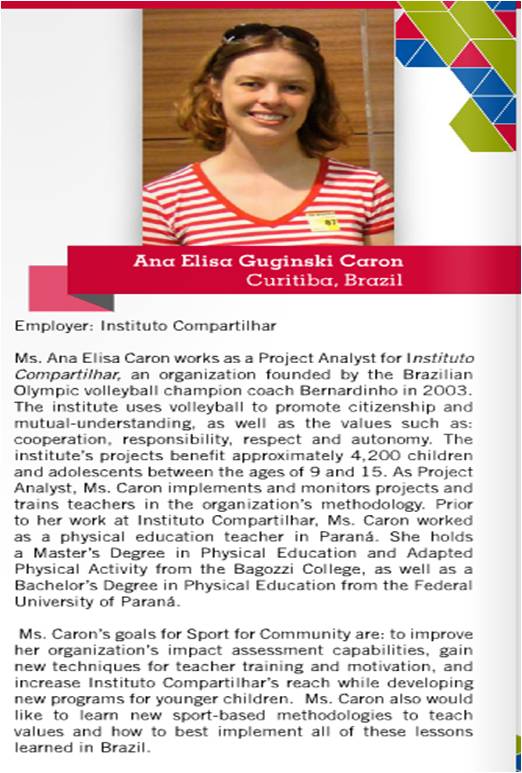
Analyst of the Institute Share projects, Ana Elisa Caron, is among the participants of the program for Community Sports.

The analyst of the Institute Share projects, Ana Elisa Caron, is among the selected for the Sports for Community. The main objective of this program is to enhance professional knowledge in social sports area in Brazil, causing them to make an exchange with other organizations working in the same area in the United States. Participants will be guided by an American mentor of a private organization or non-profit in October and November this year.

After the exchange, the program will continue in Brazil until November 2015. During this period, participants will receive support to implement projects with the knowledge gained on the trip. With the opportunity, Ana aims to contribute to human development through sport and the teaching of values. "The possibility of exchanging experiences is always positive, but the main feature of this program is that it is full. You will know and then apply the knowledge gained in each reality, "said Ana enthusiastic.

The organization responsible for Community Sports in the US is the Partners of the Americas. In Brazil it is called by Partners of the Americas and is among the entities of the Sport for Social Change Network (Rems). The Institute also integrates Share Rems and found the program through the network. Besides Ana Elisa, the Urece members, Barrichello Kanaan Institute, Association Fight for Peace, Clover Institute Guga Kuerten Institute and Rems pass through the experience.

In 2013, Ana Minivôlei Clinic minister in Natal / RN.

Sport is able to generate a positive impact in people's lives, such as social integration, and has effects in promoting ideals like peace, solidarity and justice. These data verified by the United Nations (UN) only reinforce the importance of the program for Community Sports. The Institute Share, through the platform Effect Sport (www.efeitoesporte.com.br), seeks to disseminate the evidence of beneficial results sport and presents information from the Social and Sporting their projects ( http://www.efeitoesporte.com.br/ ).

Photos: IC Disclosure.

Source texts: Partners of the Americas and Network Sport for Social Change.

http://www.partners.net/partners/Sport_for_Community.asp

http://rems.org.br/index.php/programa-de-intercambio-sports-for-community/

Max Braga is the new knowledge manager of the Institute Share

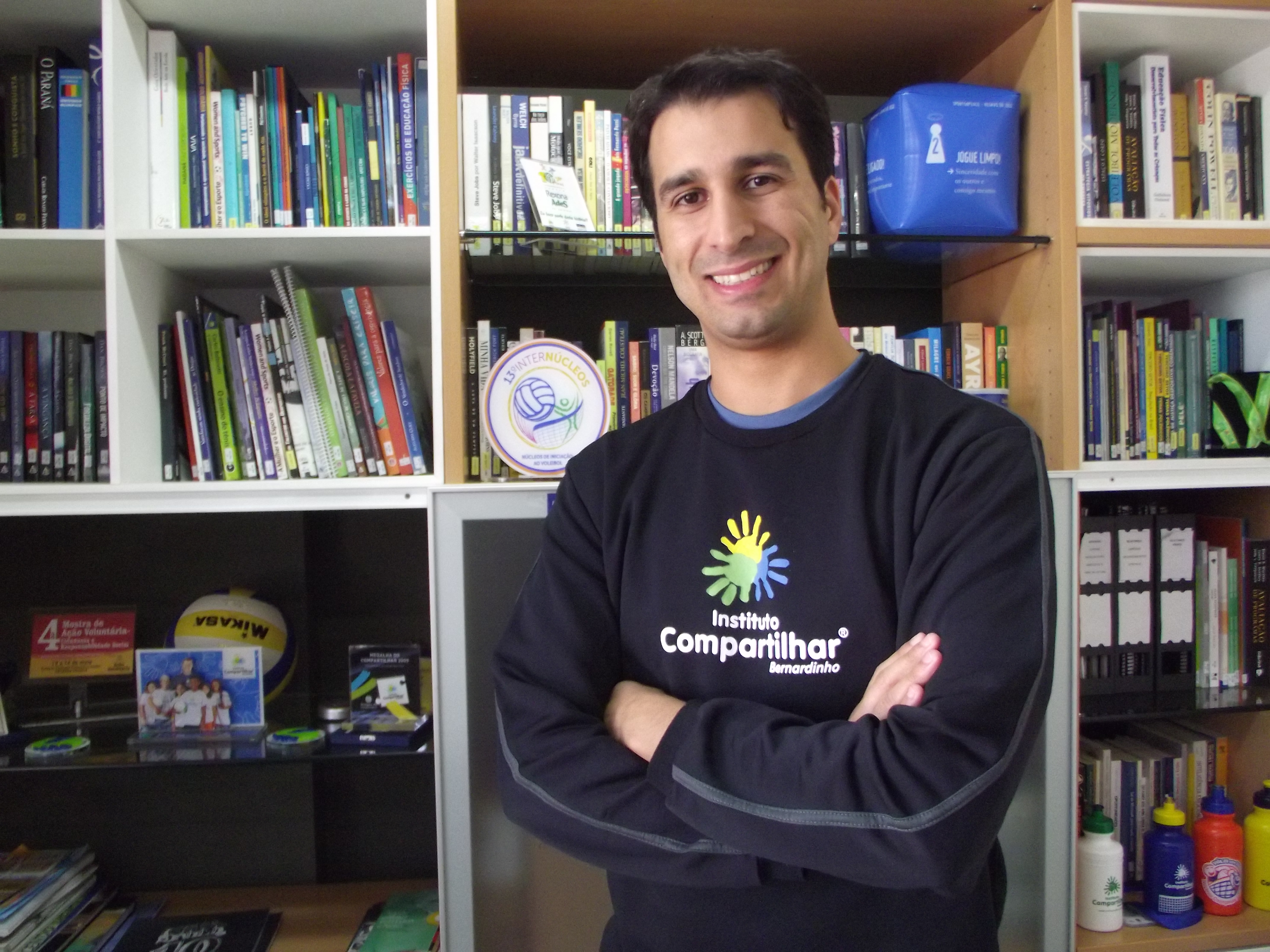
Maxwill Braga, Max, makes up the Institute team as an entity Share Knowledge Manager.

The team of the Institute Share gained another member. Maxwill Braga, or Max, as it is called by colleagues, holds a BA in International Relations from the University of Brasilia and a Masters in Education and Globalisation University of Oulu in Finland. After going through positive experiences during his professional career, especially in the area of ​​educational, Max begins a new story as knowledge manager of the Institute Share. The prospects are exciting for him and the new member is already engaged in the institution's projects.

Max is characterized by the search for new challenges. Even before attending college, he held an exchange in the United States and beyond to improve their English, might know more about the country's culture. During graduation, he apprenticed in Educational Themes Division of the Ministry of Foreign Affairs (MRE) and the Department of Trade and Services of the Ministry of Development, Industry and Foreign Trade (MDIC). In his master, he remained two years in Finland and vacations had the opportunity to intern at the United Nations Educational, Scientific and Cultural Organization (UNESCO) in Brasilia.

Before entering the Institute Share, in June this year, Max also worked on two nonprofit organizations: the Institute Evaluate Belo Horizonte / MG and Partner Brazil - Collaborative Processes Center - in Rio de Janeiro / RJ. In the latter institution participated in the program "Education for Peace" that aims at resolving conflicts in public elementary schools of the state capital. Among others, Max taught about managing emotions, types of conflicts and nonviolent communication.

The first contact Max to work with students of the Institute Share was in Volleyball Network project, in Rio Nuclei / RJ. He was delighted with the Methodology Share Initiation Volleyball and highlighted the teaching of values. "I thought fantastic! The network is little one, teachers are sensational, everything is organized and the excellent material, "he noted. “Os alunos não brigam, se respeitam e têm autonomia para organizar as quadras para a aula. Nunca tinha visto essa metodologia. Achei que funciona muito bem!”, ressaltou.

Em Curitiba, Max visitou o Núcleo Central do projeto Núcleos de Iniciação ao Voleibol no Paraná e até jogou algumas partidas de voleibol com as crianças e adolescentes. O clima foi de alegria e descontração. Curitiba também é sede do escritório administrativo do Compartilhar, onde Max passará a maior parte de seu tempo.

O gestor de conhecimento está envolvido em projetos novos, atendendo às demandas estabelecidas pelo Planejamento Estratégico Participativo realizado no início do ano. As Clínicas IC passaram a ser administradas por ele, bem como a produção de pesquisas científicas sobre as experiências do Instituto Compartilhar com o esporte. Max também coordena a implantação da plataforma Muuvit no Brasil, uma parceria do Instituto Compartilhar com a organização Muuvit Health and Learning Oy Ltd . que tem apoio da Embaixada Finlandesa, do Programa das Nações Unidas para o Desenvolvimento (PNUD) e da Rede de Esporte pela Mudança Social (REMS). Esse projeto está em fase inicial e tem como objetivo estimular os estudantes do ensino fundamental a adquirirem um estilo de vida saudável.

Max é mineiro, mas já está se adaptando muito bem a Curitiba. Teve a oportunidade de passear nos parques e disse estar gostando da nova cidade: “é limpa e as pessoas são educadas”, afirmou. Nas horas vagas, Max não deixa de lado a prática da atividade física e contou alguns de seus hobbies . Ele costuma andar de bicicleta, correr, jogar tênis e, quando possível, vôlei de praia. Além disso, não dispensa os jogos de tabuleiro, filmes, teatro e um bom livro para ler.

Photos: IC Disclosure.

Festa Junina do Núcleo Guaratuba encanta e anima alunos

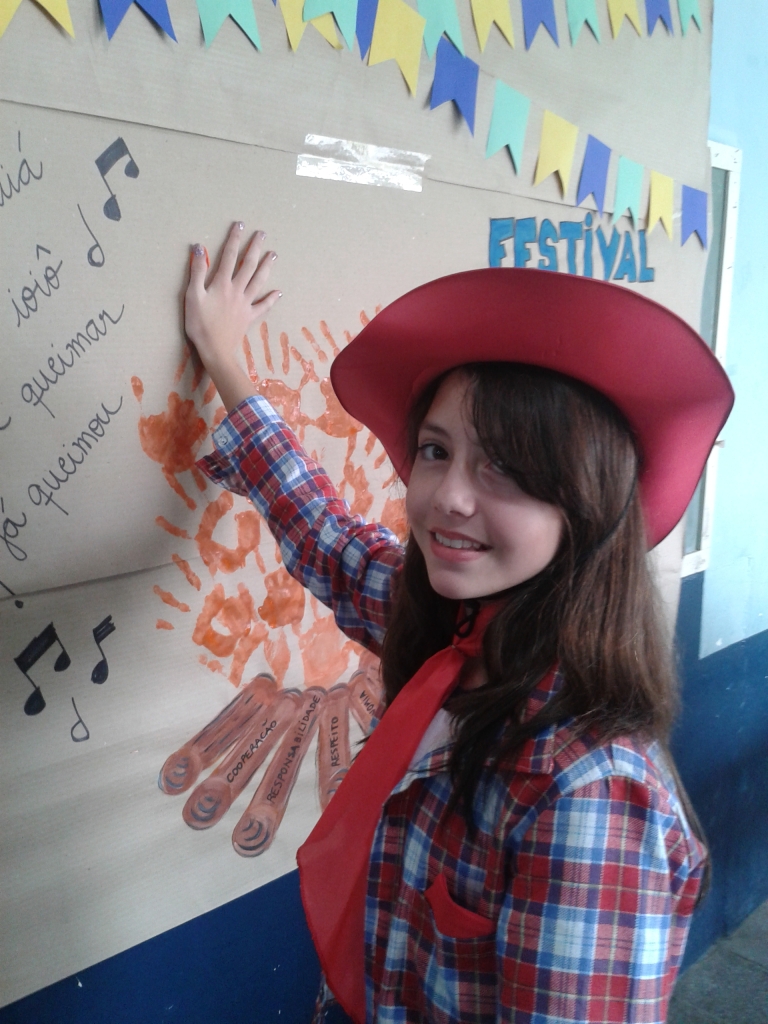
Alunos se divertem ao pintarem as mãos com tinta e formam uma fogueira no painel do evento.

O arraiá do Núcleo Guaratuba garantiu a diversão dos alunos do projeto Núcleos de Iniciação ao Voleibol no Paraná no dia 25 de junho. A festa junina organizada para a garotada da categoria Mini 3×3 aconteceu no Colégio Estadual Joaquim da Silva Mafra, sede do núcleo, e também reuniu colegas da categoria Mini 4×4. A professora Cássia Graciotto ficou admirada com o entusiasmo das crianças e adolescentes com as atividades e brincadeiras realizadas.

A primeira atração do dia foi relacionada à um painel decorado com bandeirinhas nas cores do Brasil e com elementos característicos de festa junina. A professora esperou os alunos chegarem ao evento para deixar o painel ainda mais bonito e aproveitou a oportunidade para reforçar os valores ensinados nas aulas, cooperação, respeito, responsabilidade e autonomia. Durante a atividade, as crianças e adolescentes pintaram as mãos com tinta alaranjada e com a ajuda de todos formaram a imagem de uma bonita fogueira.

Ao mesmo tempo em que o arraiá acontecia, os alunos podiam participar do tradicional correio elegante. Muitos aderiram a brincadeira, pegaram os cartões e escreveram recados aos colegas. Estes cartões eram depositados em uma caixa monitorada pela professora. Ela manteve mistério até o final da festa quando, finalmente, distribuiu as mensagens a garotada. “O correio elegante fez muito sucesso”, afirmou Cássia.

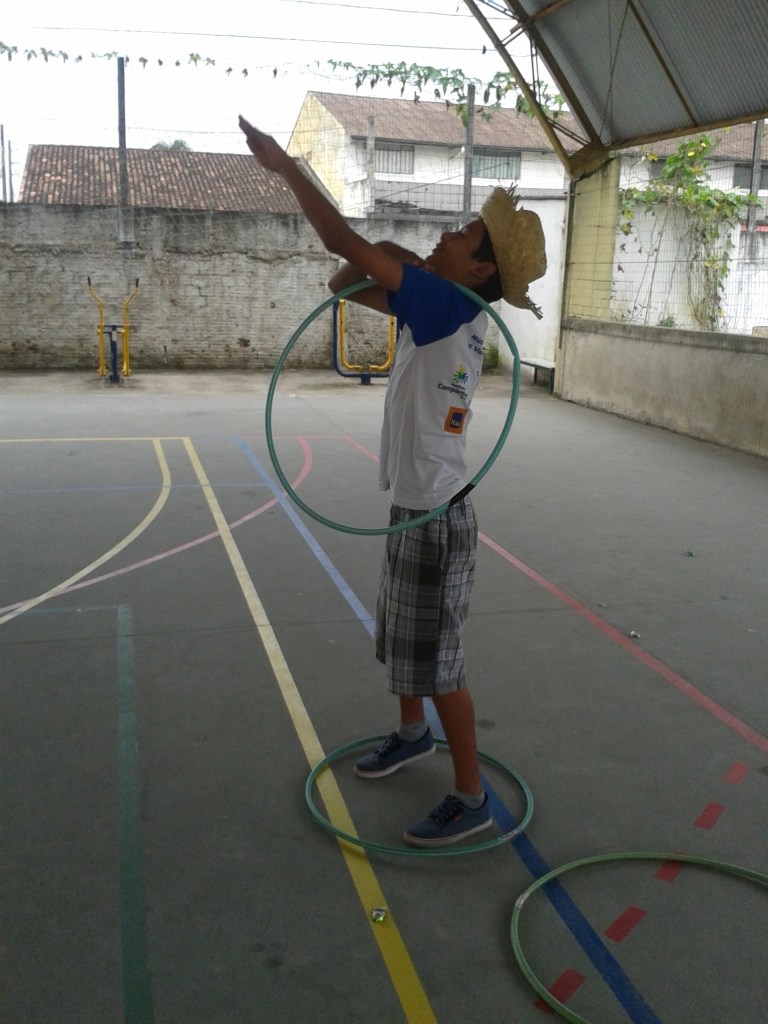
Jogo de argolas: enquanto alguns alunos arriscam arremessos com bambolês, outros se posicionam no lugar das garrafas e ajudam os colegas a acertarem as jogadas.

Quem foi conferir a festa junina do núcleo percebeu que o jogo de argolas estava um pouco diferente, mas muito animado. Ao invés de argolas foram utilizados bambolês e no lugar das garradas, os próprios alunos. Enquanto alguns arriscavam seus arremessos, outros se posicionavam no lugar das garrafas e só podiam ajudar os colegas erguendo os braços. A brincadeira rendeu boas risadas e todos puderam se divertir de maneiras diferentes.

O evento também contou com partidas de voleibol. A professora Cássia convidou alguns alunos da categoria Mini 4×4 para auxiliar na condução desta atividade, já que os colegas da categoria Mini 3×3 iniciaram neste ano no projeto e possuem dificuldades na dinâmica de jogo. As equipes foram nomeadas com temas juninos, como Santo Antônio e Cai Cai Balão, e eram formadas por dois integrantes da categoria Mini 3×3 e um mais experiente da categoria Mini 4×4. Este exercia duas outras funções, capitão do grupo e árbitro dos jogos das outras equipes.

Jogos de voleibol compõem a programação do arraiá do núcleo.

Após os jogos, os alunos se deliciaram com o lanche – bolo de fubá e chá cedidos pela escola; arroz doce e paçoquinha levados pela professora. A integração entre os alunos foi positiva e o evento foi muito elogiado. As crianças e adolescentes disseram que gostaram da festa junina, das atividades recreativas e da participação dos colegas da categoria Mini 4×4. Ao final do arraiá houve entrega de medalha para as três equipes que mais se destacaram: Festança, São João e São Pedro, respectivamente.

Project partners Nuclei Initiation Volleyball in the Paraná: State Government of Paraná and Unilever. Via Federal Law Sports Incentive: Unilever and Sports Ministry.

Photos: IC Disclosure.

Alunos do Núcleo Inhaúma – Rio/RJ se reúnem para cantar parabéns aos aniversariantes do projeto Vôlei em Rede e jogar voleibol

Festival dos aniversariantes anima adolescentes do Núcleo Inhaúma em clima de Copa do Mundo.

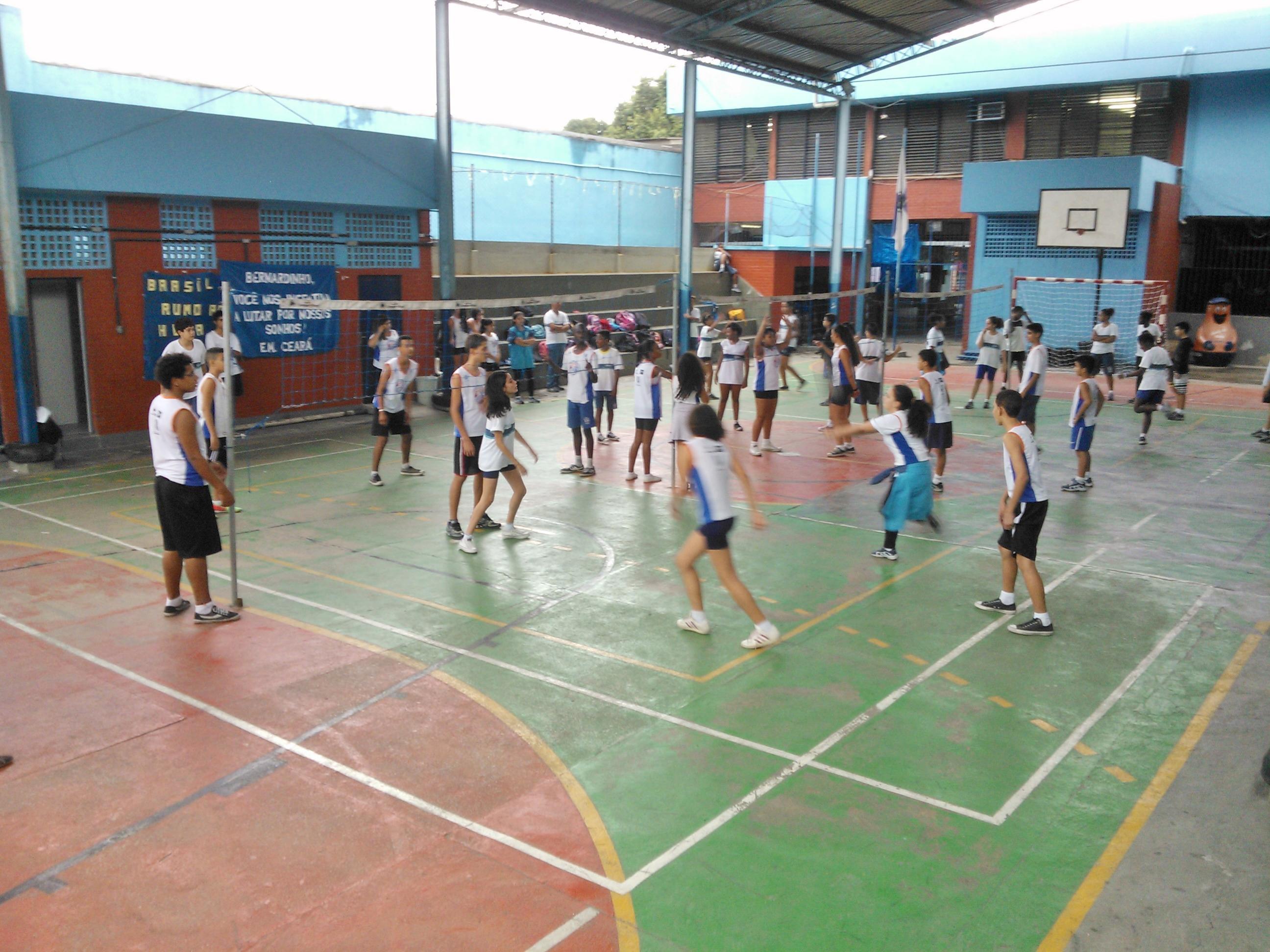
Antes do encerramento do primeiro semestre e início das férias, o professor do Núcleo Inhaúma – Rio/RJ, Roberto Lopes, organizou um festival diferente e animado. O motivo principal do evento foi comemorar os aniversários da garotada do projeto Vôlei em Rede, que aconteceram durante os primeiros meses do ano. Assim, cerca de 50 participantes se reuniram na quadra poliesportiva Luiza Helena Maia Medeiros, no dia 10 de junho. A coordenadora do núcleo, Renata Regis, professores e funcionários da escola estavam presentes e puderam acompanhar as atividades.

Conceitos importantes de cooperação, responsabilidade, respeito e autonomia foram abordados no início do Festival dos Aniversariantes. Os valores são ensinados nas aulas dos projetos socioesportivos do Instituto Compartilhar e contribuem para a formação cidadã das crianças e adolescentes. Em seguida, iniciaram os jogos entre os alunos das categorias Mini 3×3, Mini 4×4 e Vôlei.

Evento promove jogos para alunos das categorias Mini 3x3, Mini 4x4 e Vôlei.

Os participantes jogaram em quadras de Mini 3×3, mas com equipes formadas com quatro integrantes, para que todos pudessem jogar várias vezes. O local estava decorado com elementos do Brasil, devido à Copa do Mundo, e lotada de adolescentes animados com o evento.

Roberto observou as equipes em jogo. Ele ficou satisfeito com as partidas de voleibol e como os alunos praticaram os fundamentos técnicos do esporte. “A logística adotada juntou todos os alunos proporcionando o intercâmbio de conhecimento nos campos afetivo, cognitivo e psicomotor”, relatou o professor.

O aluno Matheus Victor, 13 anos, da categoria Vôlei, apreciou a maneira como o festival foi organizado: “eu gostei muito porque teve todas as categorias juntas”, explicou. A colega Erika Correa, 14 anos, da categoria Mini 4×4, tem uma opinião bem semelhante a respeito do evento: “eu gostei muito! As arbitragens foram boas e o pessoal bastante simpático”, concluiu.

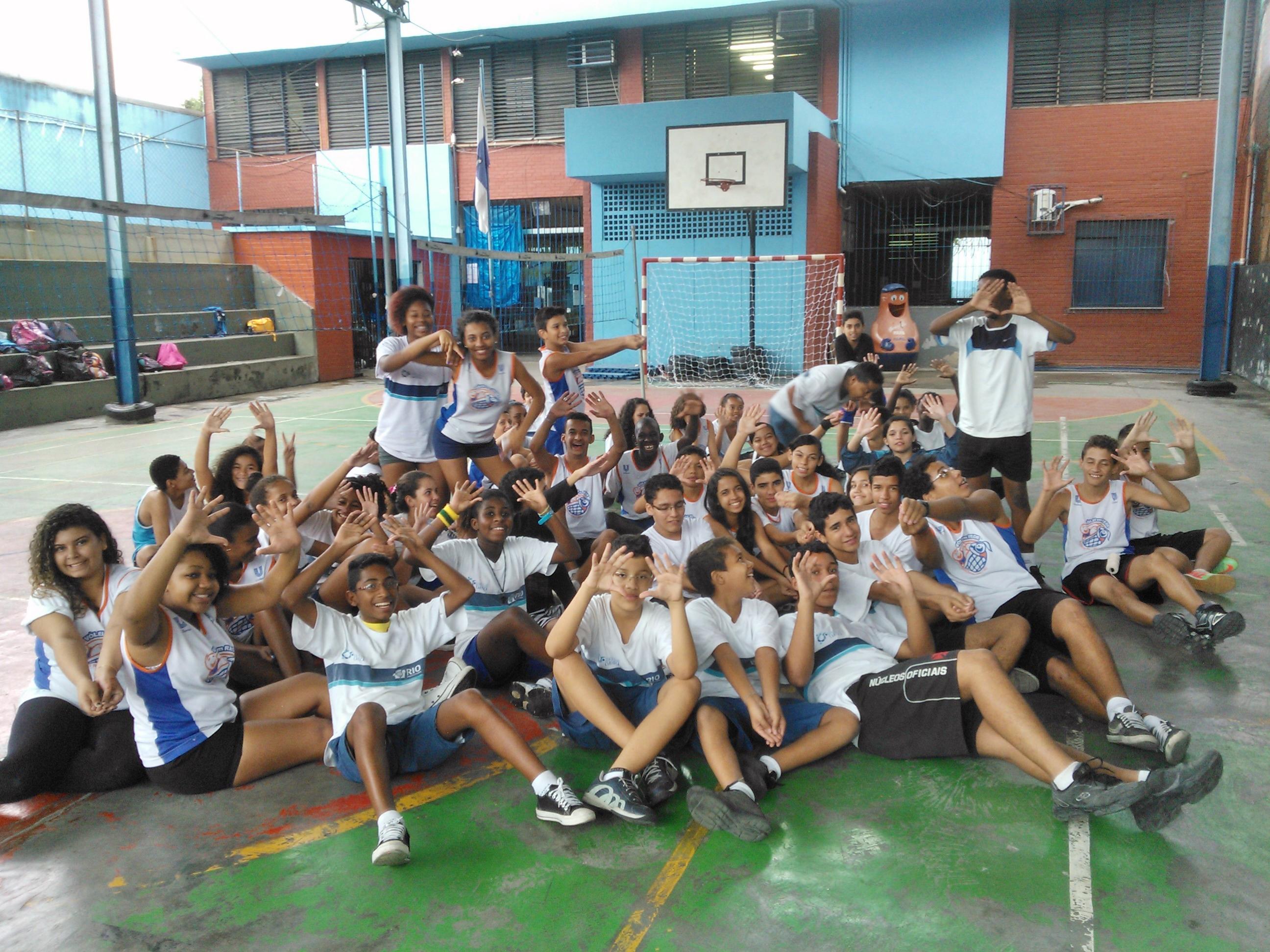
Alunos se reúnem, cantam parabéns e aproveitam o dia de festa.

Antes do encerramento do festival, os participantes cantaram parabéns aos aniversariantes e aproveitaram o bolo, salgadinhos e refrigerante disponibilizados para a festa. “O bolo estava bonito e delicioso! A festa foi ótima em todos os momentos e todos saíram felizes e muito satisfeitos”, afirmou Roberto.

Parceiros dos Núcleos Rio/RJ: Prefeitura Municipal do Rio de Janeiro e Unilever.

Photos: IC Disclosure.

Festa junina do Núcleo Central agita o sábado de alunos e familiares em Curitiba/PR

Brincadeiras animadas conquistam alunos e familiares.

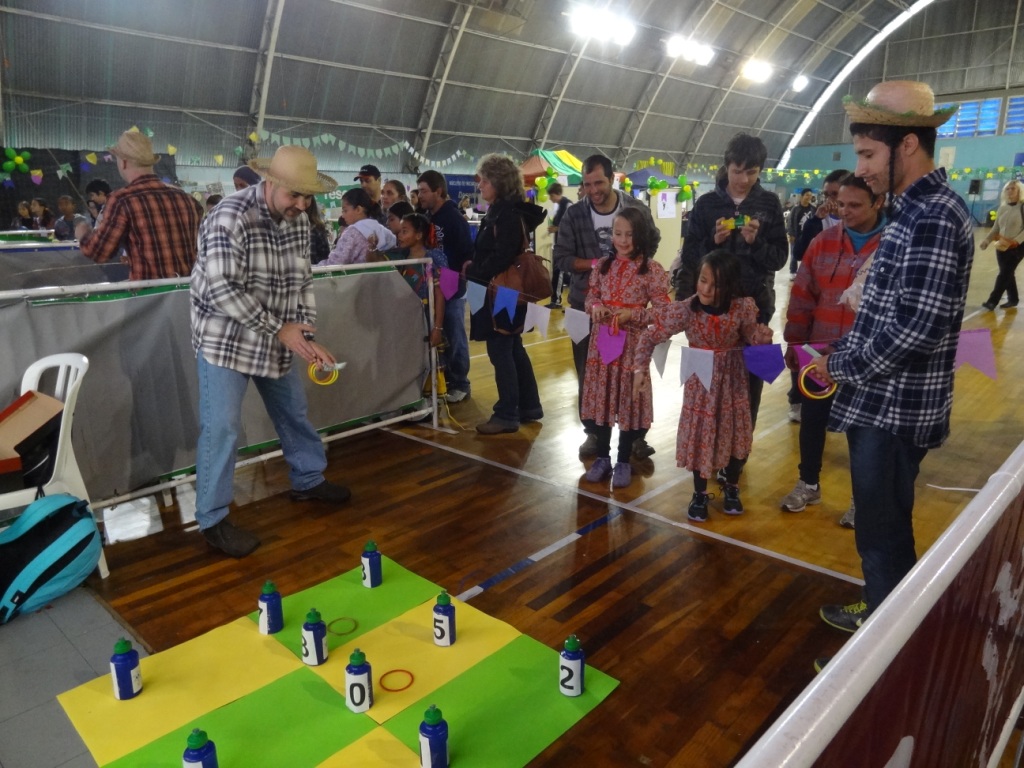
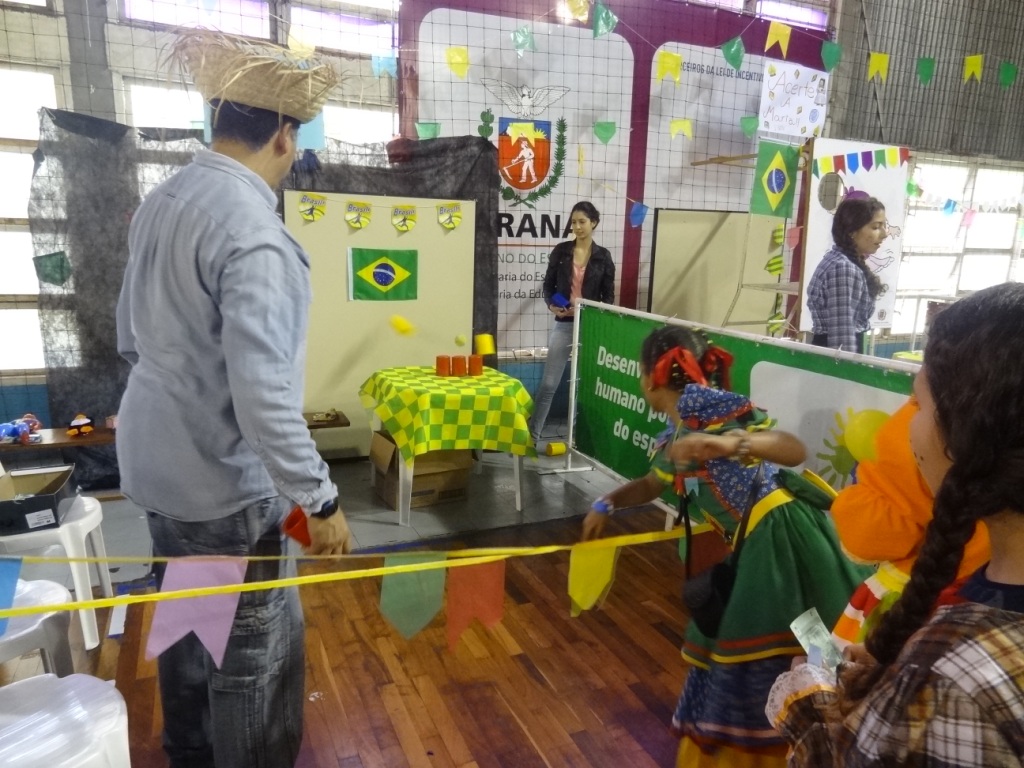
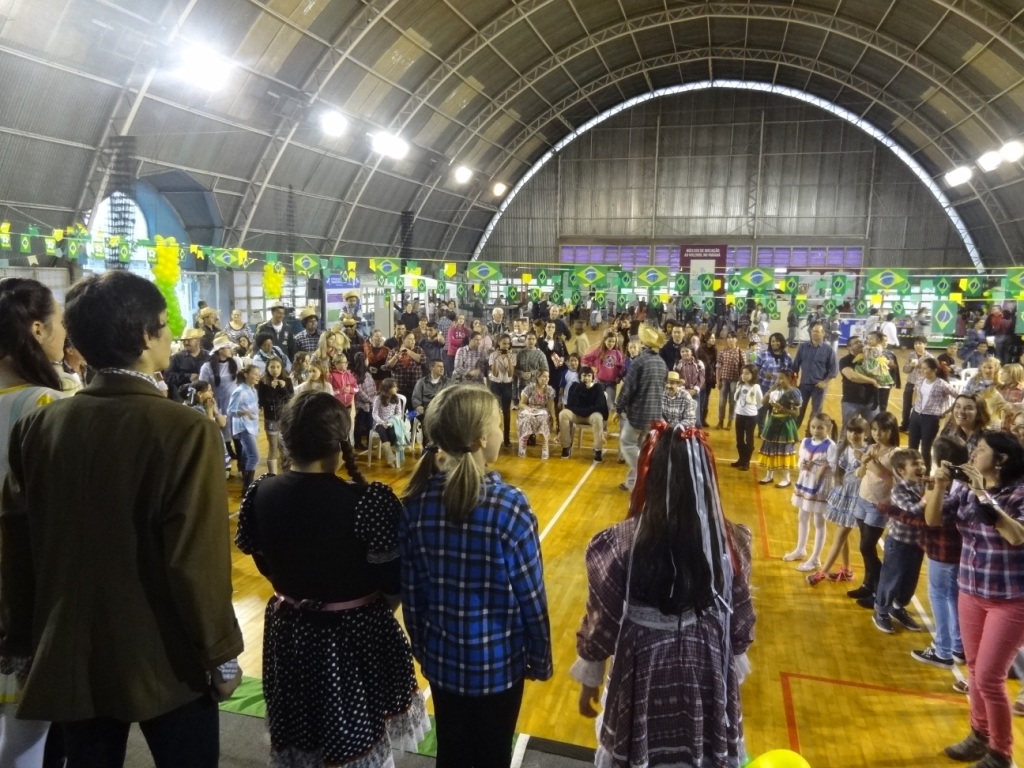
Sábado, 07 de junho, foi dia de muita diversão no Núcleo Central. Bandeirinhas nas cores do Brasil decoraram o local de aulas do projeto Núcleos de Iniciação ao Voleibol no Paraná, barraquinhas com brincadeiras típicas de festa junina alegraram quem prestigiou o evento e as guloseimas deixaram tudo ainda mais gostoso. O ginásio da Secretaria do Estado do Esporte e do Turismo estava repleto de alunos e familiares com roupas de caipira e preparados para passar a tarde com os professores do núcleo, mais animados do que nunca. A festa junina contou também com bingo e a famosa dança da quadrilha.

Estavam à disposição da garotada e convidados brincadeiras como pescaria, cama-elástica, jogo de latas, argolas, pebolim, jogos gigantes de tabuleiro, cadeia e acerte a Maria – semelhante à brincadeira da boca do palhaço -, além de um backdrop localizado logo na entrada para que as pessoas pudessem tirar fotos com roupas caipiras. Os meninos gostaram bastante da cadeia – supervisionada pelos adolescentes do Super Vôlei -, e correram de um lado a outro do ginásio atrás dos colegas. A diversão estava garantida. As guloseimas davam água na boca. Tinha pé de moça, pipoca doce, arroz doce, paçoca, suspiro, doce de amendoim e de abóbora. Claro que não faltaram pinhão (comida típica de inverno no sul do País) e cachorro-quente, além dos refrigerantes.

Festa Junina do Núcleo Central diverte participantes.

A professora Tatiana Ribas elogiou a participação dos pais na preparação do cachorro-quente, nas barraquinhas de comida, bebida e no caixa. “Eles foram maravilhosos, extremamente cuidadosos e dedicados”, ressaltou Tatiana. Aderbaldo Reccieli, pai da aluna Alyssa Reccieli, 11 anos, da categoria Mini 3×3, colaborou com a festa. “Sempre que precisar estou disponível, sou aposentado e posso ajudar. A festa foi muito bem feita”, disse. Gilda Bacili, mãe da professora Dayane Prado, também foi generosa e disse: foi muito bom trabalhar no evento, oportunidade única, fiquei muito feliz em poder estar aqui hoje. Quero voltar no ano que vem”, revelou. Tatiana também ressaltou o envolvimento dos profissionais do projeto com a festa: “toda a nossa equipe de trabalho esteve extremamente comprometida com cada ação que aconteceu no dia, realmente preocupados para que tudo funcionasse da melhor maneira”.

Tanto para participar das atividades como para saborear as comidas típicas, era necessário adquirir NIVlecas – um estilo de vale. Os alunos conseguiram NIVlecas ao levarem doces, refrigerantes e prendas. Aqueles que participaram do evento e foram caracterizados também ganharam. Além disso, era possível adquirir as NIVlecas por valores simbólicos durante a festa e o dinheiro arrecado será destinado ao passeio de fim de ano dos adolescentes do Super Vôlei. Este é o último ano em que eles frequentarão as aulas de voleibol devido à idade limite permitida para participar do projeto (15-16 anos).

Ainda durante o evento, os apaixonados e brincalhões puderam mandar cartas pelo Correio Elegante. Rúbia Souza, 15 anos, do Super Vôlei e a ex-aluna Rafaela Martins, 14 anos, ficaram responsáveis por esta atividade. De acordo com as meninas, o movimento foi grande e elas conseguiram entregar várias mensagens. “No começo a gente ía atrás das pessoas, mas depois começaram a procurar a gente”, contou Rafaela. Quando perguntadas sobre a quantidade de cartas relativas ao amor e às brincadeiras, ambas concordaram dando risada: “teve muita brincadeira”. Os alunos do Super Vôlei foram essenciais na realização do evento e ajudaram em várias atividades. Os professores organizaram uma escala para que eles também aproveitassem a festa.

Concurso Família Buscapé é uma das atrações da festa junina.

Os professores Alexandro Martins e Roger Marchese comandaram o palco da festa e conseguiram agitar alunos e familiares. Eles trocavam nivlecas com quem conseguisse realizar alguns desafios engraçados como encontrar uma meia furada e dançar uma música no palco, na frente de todos. Estes desafios não intimidaram os participantes que conseguiram realizar as tarefas muito bem. O bingo foi outra atividade que conquistou a atenção dos participantes da festa junina e até as crianças e adolescentes ajudaram a preencher as cartelas. Vários prêmios foram entregues, entre eles uma bola de vôlei.

Também teve um concurso para eleger a Família Buscapé. Ao todo foram nove famílias inscritas, que deram um show à parte. Os professores também formaram uma família e fizeram uma performance animada aos presentes. A votação foi feita por uma banca de juízes formada por um responsável, um aluno, um ex-aluno e um professor e a família vencedora ganhou um kit com sacolinha e garrafinha de água do Instituto Compartilhar, vuvuzela (ou corneta) para torcer ao Brasil na Copa do Mundo e confeitos nas cores verde e amarela. “Gostei muito do evento, muito organizado, claro que teve muita dedicação de vocês professores, mas foi tudo 10”, disse Gabriel Tsuda, 13 anos, da categoria Vôlei.

A festa junina se encerrou com a dança da quadrilha. A ex-aluna Victória Gomes, 14 anos, estava presente e ajudou a cuidar de uma das barraquinhas de brincadeiras, assim como outros ex-alunos. “Isso aqui é minha vida”, revelou Victória. Rosiane Funaki, mãe do aluno Leonardo Funaki de Souza, 10 anos, achou a festa junina bem diversificada e destacou o ensino dos valores durante as aulas de voleibol. “A didática dos professores é excelente!”, disse. Já Kátia Regina da Costa, mãe da aluna Ana Gabriela, 13 anos, também gostou do evento: “muito bom! Principalmente porque aproxima a família”, afirmou.

A ex-aluna Renata Martins, convidada que auxiliou na organização da festa junina, disse que o projeto faz parte da vida dela: “infelizmente sou ex-aluna, mas felizmente posso continuar participando, continuar neste lugar que me traz lembranças boas e que me abriu tantas portas. Vocês sempre me auxiliaram (e ainda me auxiliam) tanto e agora me sinto honrada em poder ajudar”, contou satisfeita. Renata acrescentou: “por favor, contem comigo para quando for necessário!”. O aluno Lucas Branco, 8 anos, da categoria Mini 2×2, afirmou convicto: “eu gostei porque foi o melhor dia da minha vida!”.

Project partners Nuclei Initiation Volleyball in the Paraná: State Government of Paraná and Unilever. Via Federal Law Sports Incentive: Unilever and Sports Ministry.

Photos: IC Disclosure.