Lectures at the Center Natal / RN contribute to student learning

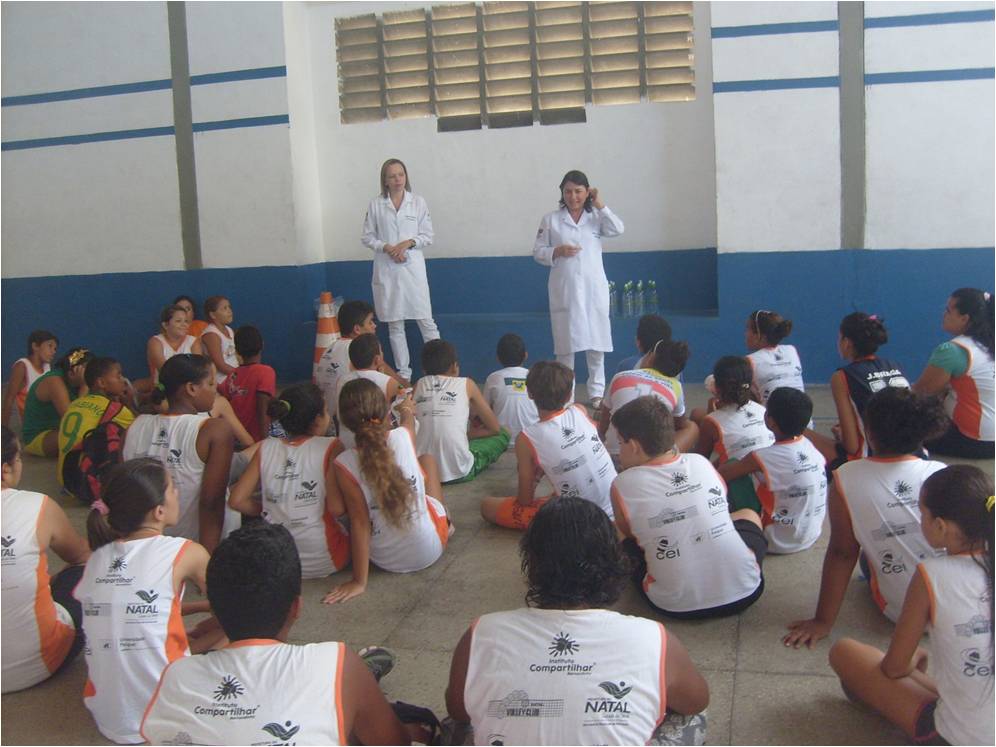
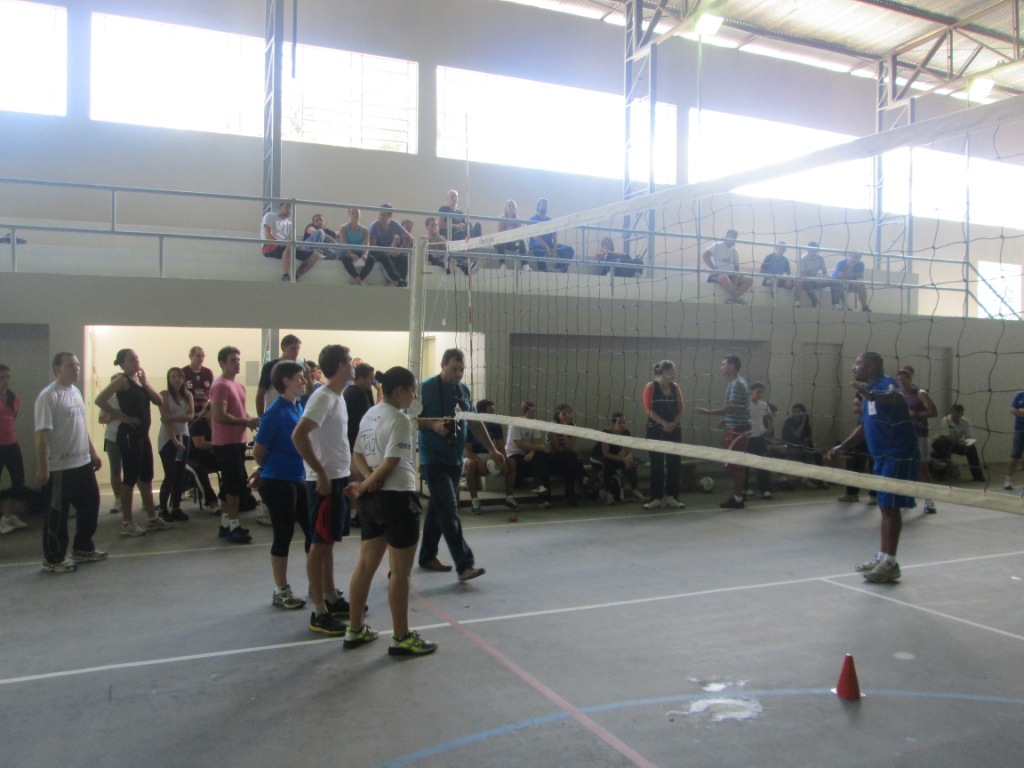
Core Natal students / RN attend the lecture "Benefits of water intake by athletes," held on March 19.

The month of March has been very productive for the students of the Center Natal / RN Network Volleyball design. They were visited by health professionals at the University Potiguar (UNP), the Mobile Emergency Service (SAMU) and military police of the Educational Program of Resistance to Drugs and Violence (PROERD). In addition to the lecturers and students were present parents or guardians, teachers, interns and coordinators of the Institute Share. In all these talks, held at Christmas Volley Club - where they occur the core activities - stood out the integration of design students.

"Benefits of water intake by athletes" was the first event held on the 19th with the students of the afternoon, the Mini category 2 × 2, 3 × 3 and Mini Volleyball. With guidance from nurses, they were able to learn the importance of water in the body and the benefits of your daily intake. (In addition to information acquired in the lecture), students Iago Cauê, 9, the Mini 2 × 2 category, says he learned that should take the bottle of water to class.

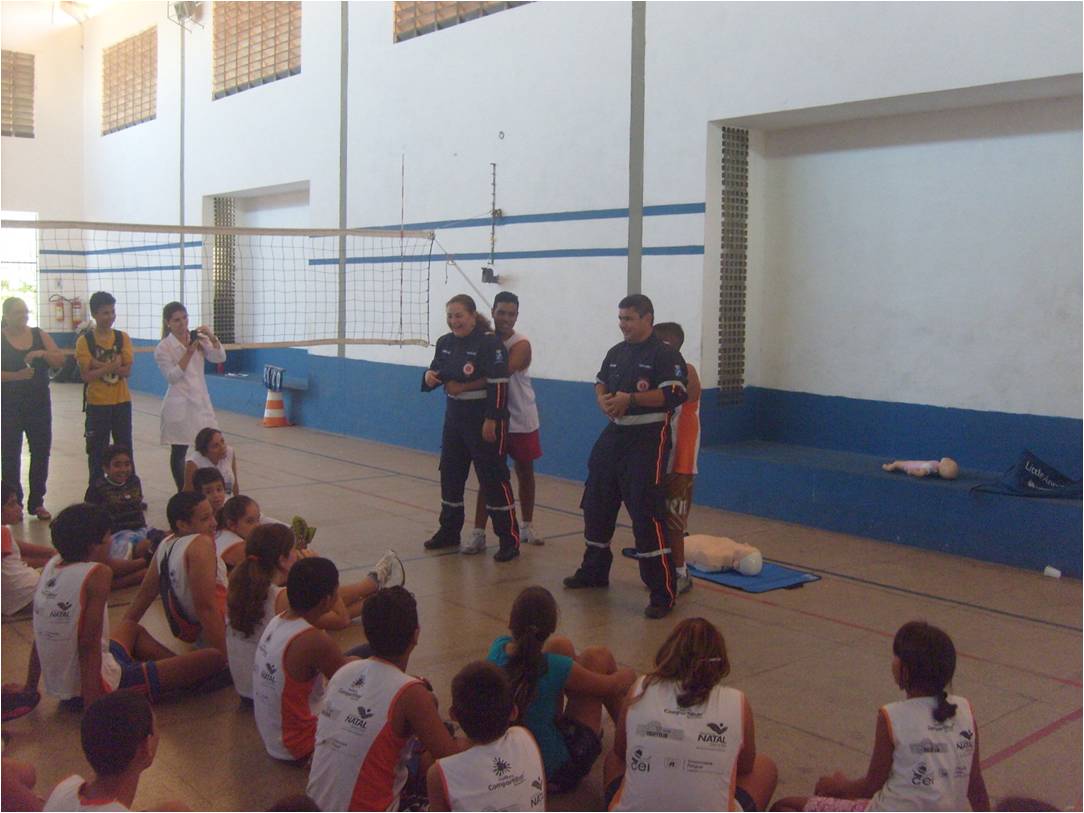
SAMU crews are first aid demonstration to the students of the morning shift.

Notions of first aid with the help of adult mannequins and children, guidelines and information on the harm caused by the "prank phone calls" passed to Samu, on the 26th, the morning shift students attended the lecture with nursing professionals of UnP and Samu.

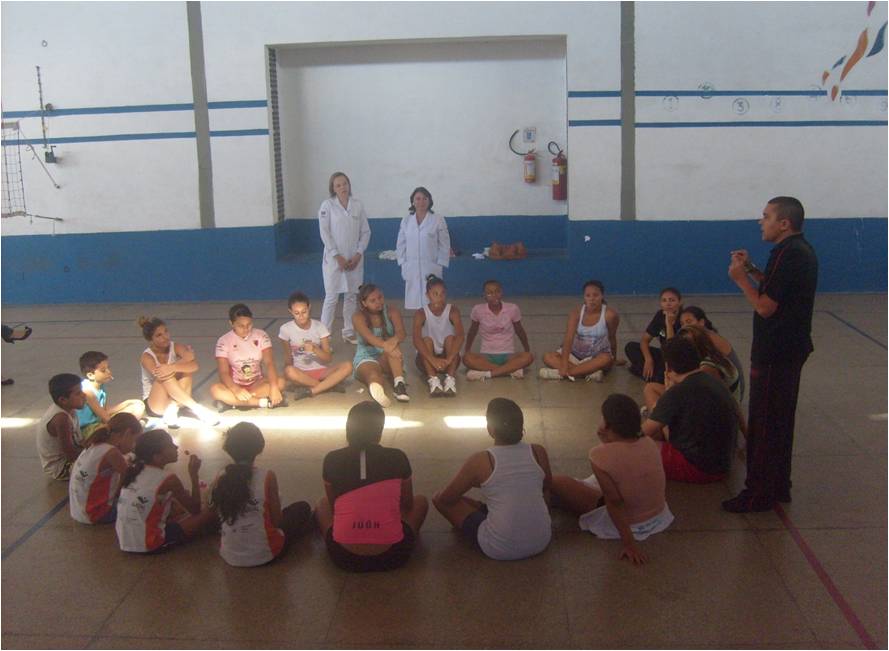
Youth participating in the lecture held by the military police of PROERD and health professionals UNP.

Aiming to encourage young people to value life and family, military police PROERD and health professionals UNP approached the theme "Fight against drugs and violence". The lecture was held with students of classes 4 × 4 and afternoon shift Volleyball on the 27th of that month.

Core partners Natal / RN: City Hall Christmas, Christmas Volley Club, Integrated Education and University Potiguar.

Photos: IC Disclosure

7 benefits of Capoeira according to the website Educate to Grow

Did you know the Instituto Share not only works with the Volleyball? The Sport in Action project also offers capoeira classes and you know a little more about the benefits of this sport, we find this text posted on the website Educate to Grow of Editora Abril. The Strong Core Leme - Rio / RJ and Garden City Center - São José dos Pinhais / PR promote these classes.

It was in the 16th century that Capoeira first emerged in Brazilian territory. Mixing form of struggle and worship, she came among blacks, originating in Africa, were brought by the thousands for slave labor. Of course, they did not have any freedom to practice their traditions, so Capoeira was then presented in a disguised form, like a dance with singing and more. Gradually, however, it turned out to avenge throughout the Northeast of the country, gaining diversity of styles - one of the most popular (and older) is called Capoeira Angola, characterized by low blows, flush to the ground, and excited by the rhythm of music slow.

The child who practices Capoeira learn not only to play but also to sing (which has been transmitted orally for centuries, African songs specially created for this type of activity) and playing (among the most traditional instruments, particularly the berimbau, the tambourine and caxixi, a rattle made of seeds). The game of Capoeira also improves emotional control, stimulating observation and defense, when necessary, as opposed to encouraging aggression and violence. "In the case of Angola Capoeira style, it can translate rhythm and body movement ideas of humanistic education," adds Ana Cristina Marotto, educational and pedagogical advisor of the College Team in São Paulo. "It is great tool for moral, physical and cognitive training."

Recommended for students 3-11 years, the game of Capoeira help in countless ways the development of both boys and girls. See the following benefits.

1. diffuses the value of the defense - and not the attack

Capoeira is a game that makes clear distinction between defense and attack - this differentiation that can influence a behavior style and way of thinking for life. Those who practice Capoeira is therefore not encouraged to come out attacking and then see how it goes, but look, reflect and, if really necessary, know how to act in order to ensure self-defense. The sooner the child can make that distinction, the faster your understanding of how violence is not worth it.

2. Help in moral education

The class of Capoeira usually begins with a conversation wheel, which discusses the interaction of rules and participation of each etc. It is an activity that develops respect, tolerance. Because children are always interacting with each other to perform the simplest gesture - each have, for example, be aware of the movement you want to do not to hurt each other, and live with the way of being of each colleague, understanding the game takes place between everyone, regardless of talent or lack of it. All are equal - and, instead of pointing out the best (and worst) players, which encourages the partnership is to teach what you know so that fellow can evolve as well.
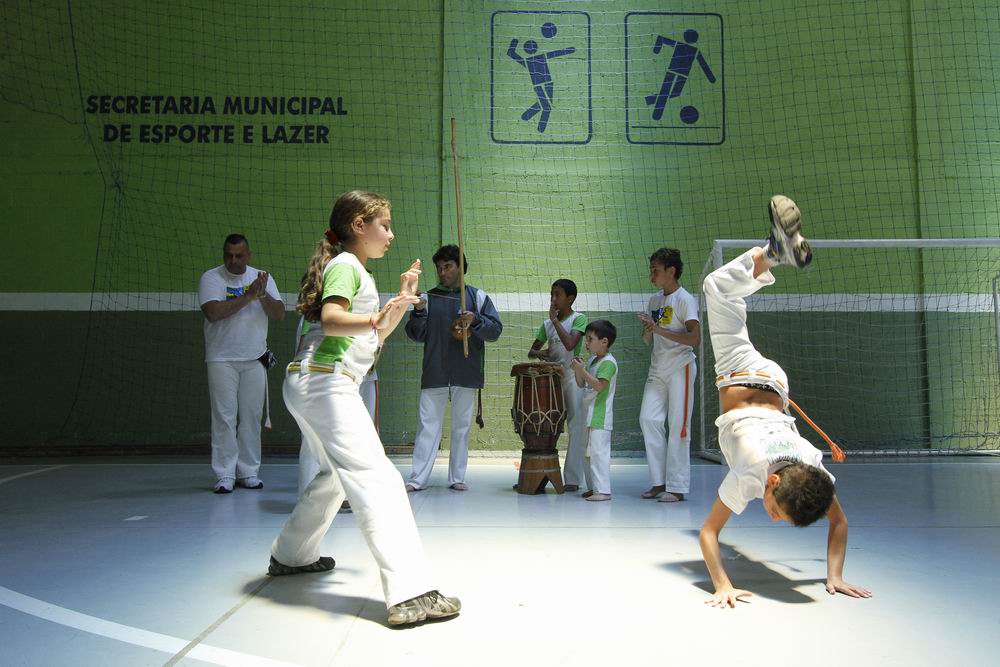
Core students Garden City - São José dos Pinhais / PR practice capoeira.

3. Develops and expands cognition

Those who practice Capoeira receive information about popular culture, the origin of the game itself, the traditions celebrated in music and songs, the instruments that encourage activity and so on. It is a knowledge transmitted every conversation wheel at the beginning of class, increasing the repertoire of the students on the formation of the Brazilian people, in short, the history of their country. This is not one type of information made to decorate, but rather stoke interest of the child by our cultural identity.

4. awakens the childlike curiosity

Those who practice Capoeira has its sound perception stimulated by the use of musical instruments, as well as body awareness is fueled by unusual movements. It is an activity that opens a range of opportunities - girls and boys can find out by playing Capoeira, a taste for folk dances, others, by singing, all of them going after specific courses. In short: a wake-up skills, valuable source of knowledge and self-love.

5. Promotes physical development

The game of Capoeira explores two opposing ways, the balance and imbalance - how do you take a tumble and then recovering the plummet - these situations of similar value, after all, the imbalance can also affect and disrupt emotionally, so be precise take strategies for balance and move in the game. All this relates to typical blows of Capoeira - including the ginga, the stingray's tail, the half moon and star. Movements that require balance and muscle tone, working with legs, arms, torso, waist etc. The student must earn elasticity, balance and self-confidence to launch into space not afraid to smash the ground. This is how children learn to recognize the limits of the body, acquiring security on own performance.

6. stimulates emotional control

Mess with the body means dealing with some of our most primitive emotions - aggression, for example. It is true that the game of Capoeira expose each student to the group, but it also can strengthen control over sensitive situations, case be ashamed for not making right a star, not having pace to sway etc. How? Capoeira lessons value the potential of each one, which has already won and can do well - after all, every child has guaranteed competencies and others to be developed. Or: all have abilities to learn and develop, each in their learning time to be respected.

7. Combat inhibitions

Capoeira in class, the child is strongly encouraged to dance, play, play and sing. There is, therefore, shyness space - and she understands that you have to expose the group with all its imperfections. Gradually, fear or any other type of insecurity loses momentum, because the child feels more and more comfortable in the universe dominated by respect, as is the Capoeira.

Source Text: Educate to Grow.

Strong Core students Leme - Rio / RJ participate in the capoeira baptized.

Available at: < http://educarparacrescer.abril.com.br/aprendizagem/7-beneficios-capoeira-635567.shtml >

Photos source: IC Archive 2012.

City Lapa / PR receives Mini Volleyball Clinic

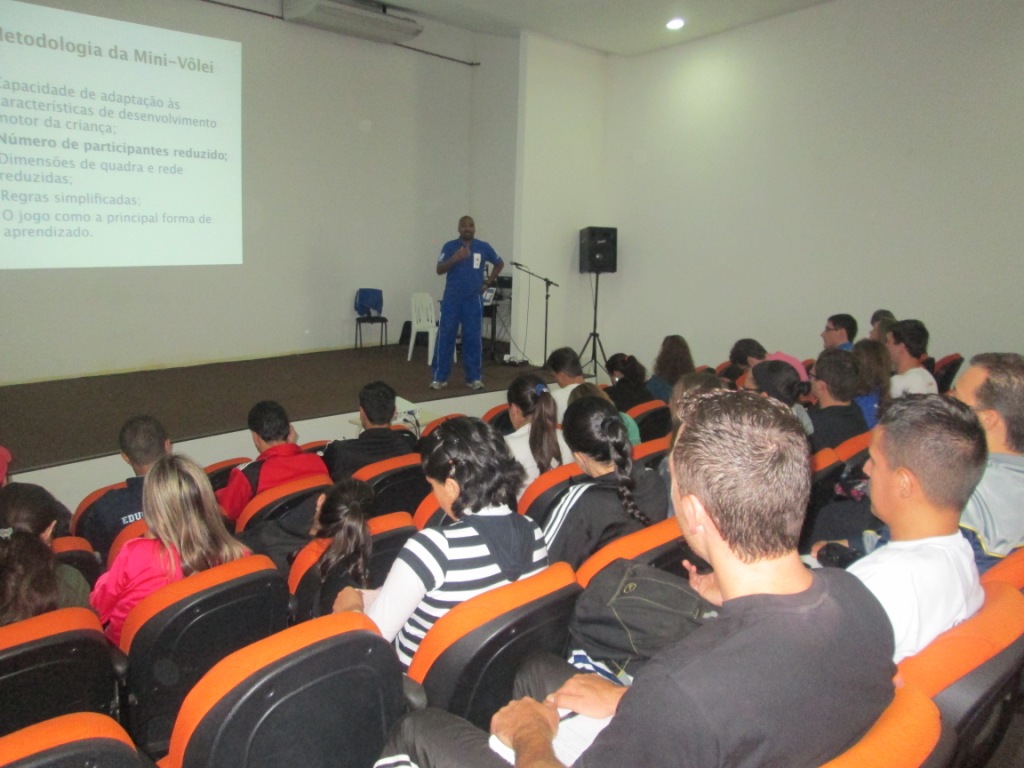
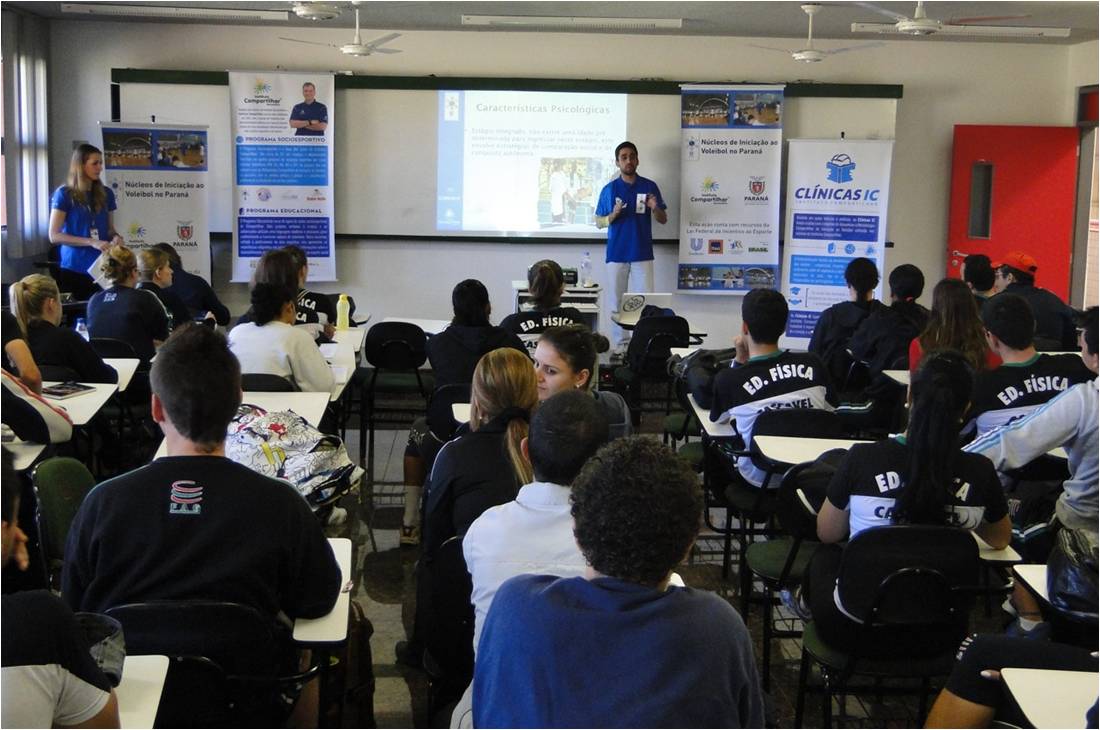
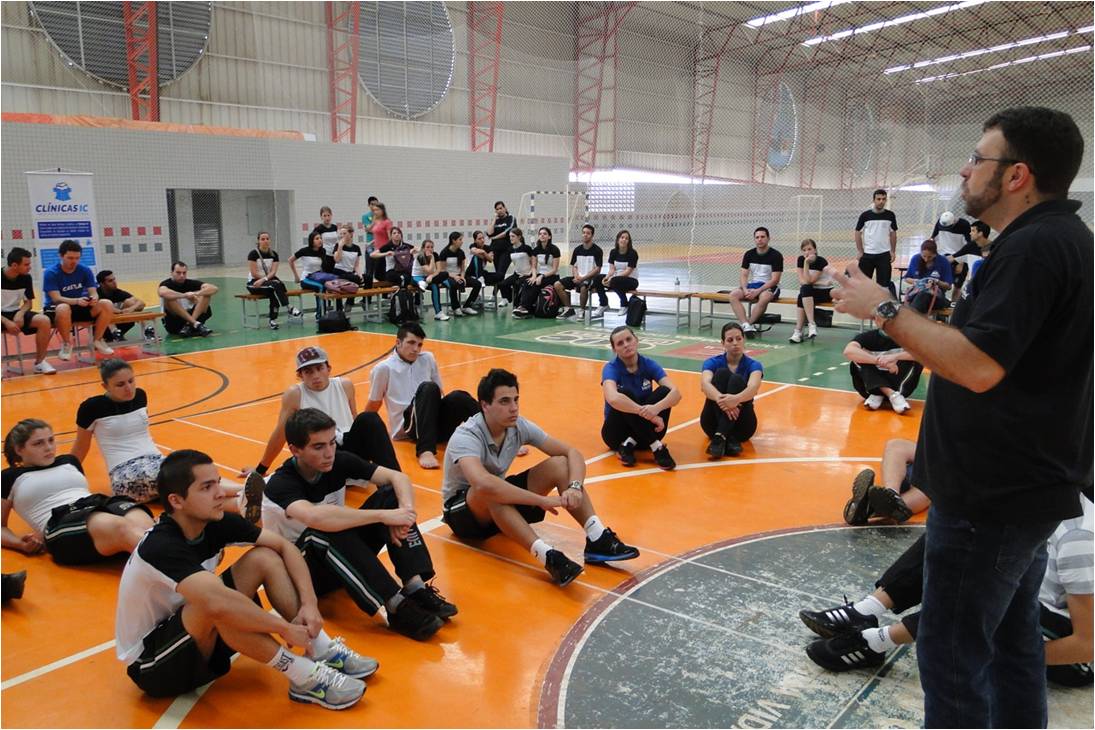
The coordinator of the Volleyball Initiation Centers project, Josmar Coelho, Minister lesson in the auditorium of the Department of Education.

Share the Institute representatives were at Lapa city in Paraná, on 22 March, to perform Mini Volleyball Clinic, which aims to spread the Methodology Share Initiation to Volleyball, used in all Social and Sporting projects of the institution. The City of Lapa, partner of the event, gave the space and block materials for the realization of the clinic, which brought together 61 people, including students and physical education teachers, two of these of the Sports Secretary of State (SEES).

The lectures, held in the morning, took place in the auditorium of the Department of Education and practice in Gym Poliesportivo Raul Siqueira, in the afternoon. The pedagogical coordinator of the project Nuclei Initiation Volleyball in Parana, Josmar Coelho, and knowledge manager of the Institute Share, Fabio Okazaki, were responsible for administering the clinic.

Students of Mini Volleyball Clinic participate in practice session held at Lapa.

There was draw some materials to the participants of the event, in order to publicize the work of Share such as shirts, keychains, comic books is ... Share and annual reports. According to Fabio Okazaki, the clinic reached its purpose and the students were "willing and participating in all the proposed activities."

Photos: IC Disclosure

Brazilian Army has lecture Rezende

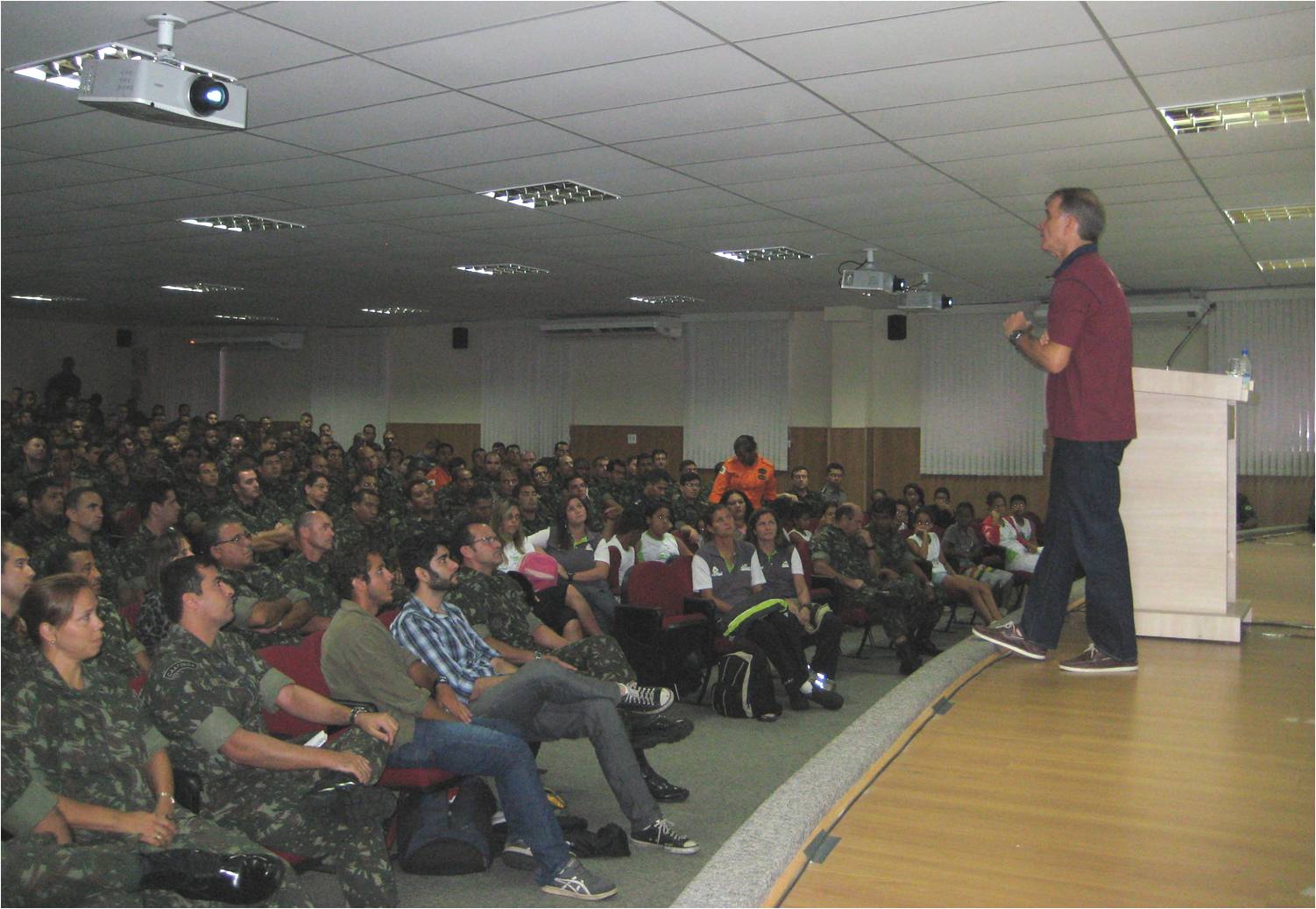
Minister Rezende lecture at the CEP.

"The Pursuit of Excellence" was the lecture given by Rezende, CEO of the Institute Share and coach of men's team volleyball, held on March 19, the Personnel Studies Center (CEP), the Brazilian Army, in Rio de Janeiro / RJ. Among the topics discussed, was the leadership, team building, inspiration and discipline. The executive manager of Share Luiz Fernando Nascimento, who was kicked off the event by presenting the instructional video and the Sport in Action project, Core Forte do Leme - Rio / RJ. It is through this core that there is a partnership with the Brazilian Army, handing over the sports facilities of the CEP for the project activities.

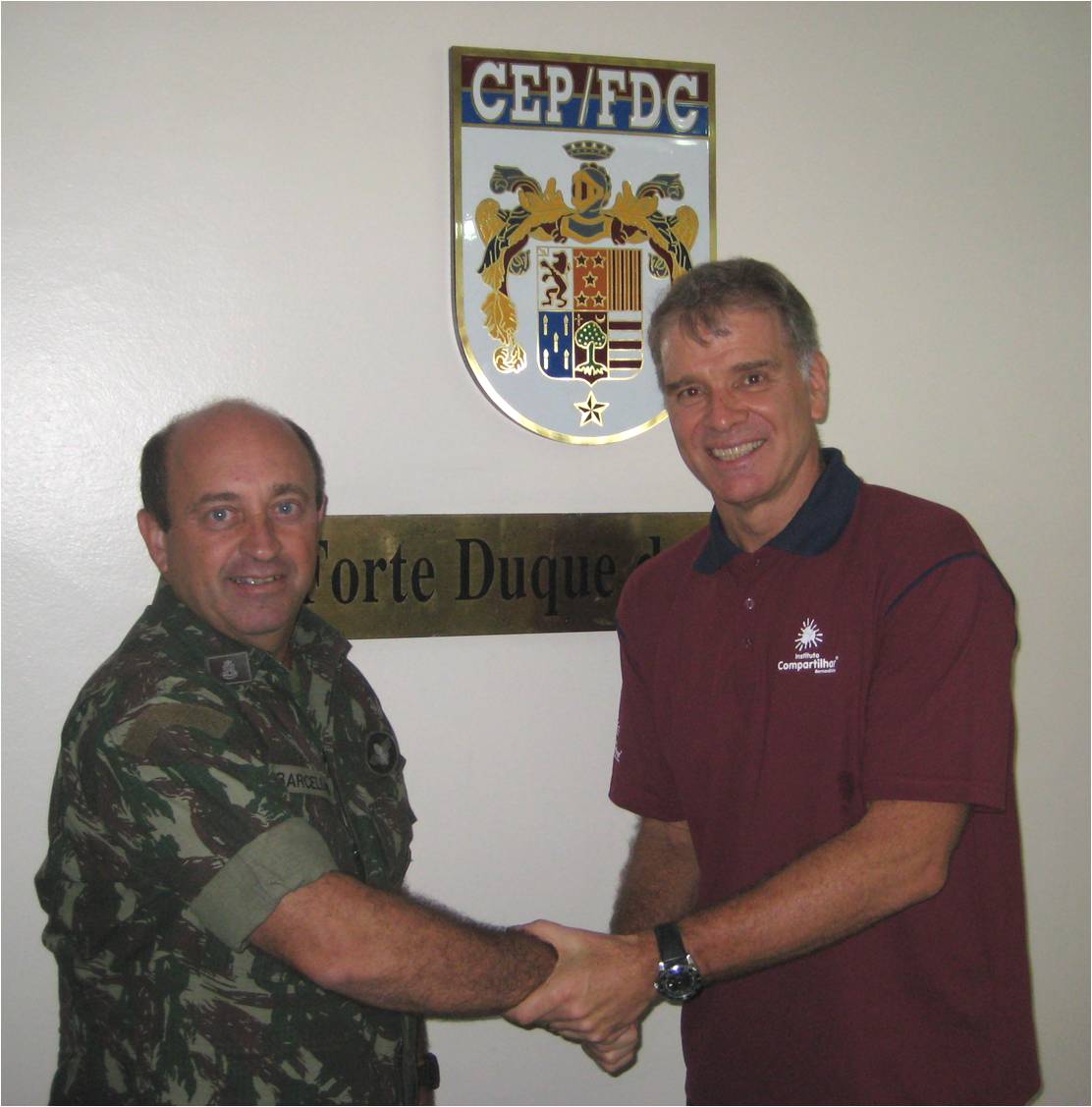
Colonel Ronaldo Barcellos (left) and Rezende shake hands, at an event held on 19 March.

The lecture was attended by the Commander of the CEP and Duque de Caxias, Colonel Ronaldo Barcellos Ferreira de Araujo, who welcomed Rezende. Other 280 people are present, between military, family, civil authorities, teachers and children of the nucleus.

It was intended time for guests could answer questions and curiosities and, at the end of the lecture, Rezende was honored. The event is a form of recognition by the Share, the existing partnership with the Brazilian Army for five years.

Photos: IC Disclosure

Minister Rezende lecture at the Brazilian Army

Tomorrow, March 19, the CEO of the Institute and Share coach of men's volleyball selection, Rezende, will give a lecture to be held on Personnel Studies Center (CEP), the Brazilian Army, in Rio de Janeiro / RJ, located in Plaza Admiral Julio de Noronha. The event marks the beginning of the school year the students of the regular courses of Social Communication, Psychology and Educational CEP coordination. It is expected approximately 280 people, including military, family and civil authorities. The executive manager of Share Luiz Fernando Nascimento will open the event at 14h to present the work of the entity and then Rezende present a lecture on "The Pursuit of Excellence".

The Leme Fort Core maintains the Brazilian Army as its public partner since its inception in 2007. Through the Personnel Studies Center (CEP), the Army gives the sports facilities for the activities, as well as a space for project administration .

Join the first clinic in Lapa IC / PR

Mini Volleyball Clinic held in 2012 in the city of Cascavel.

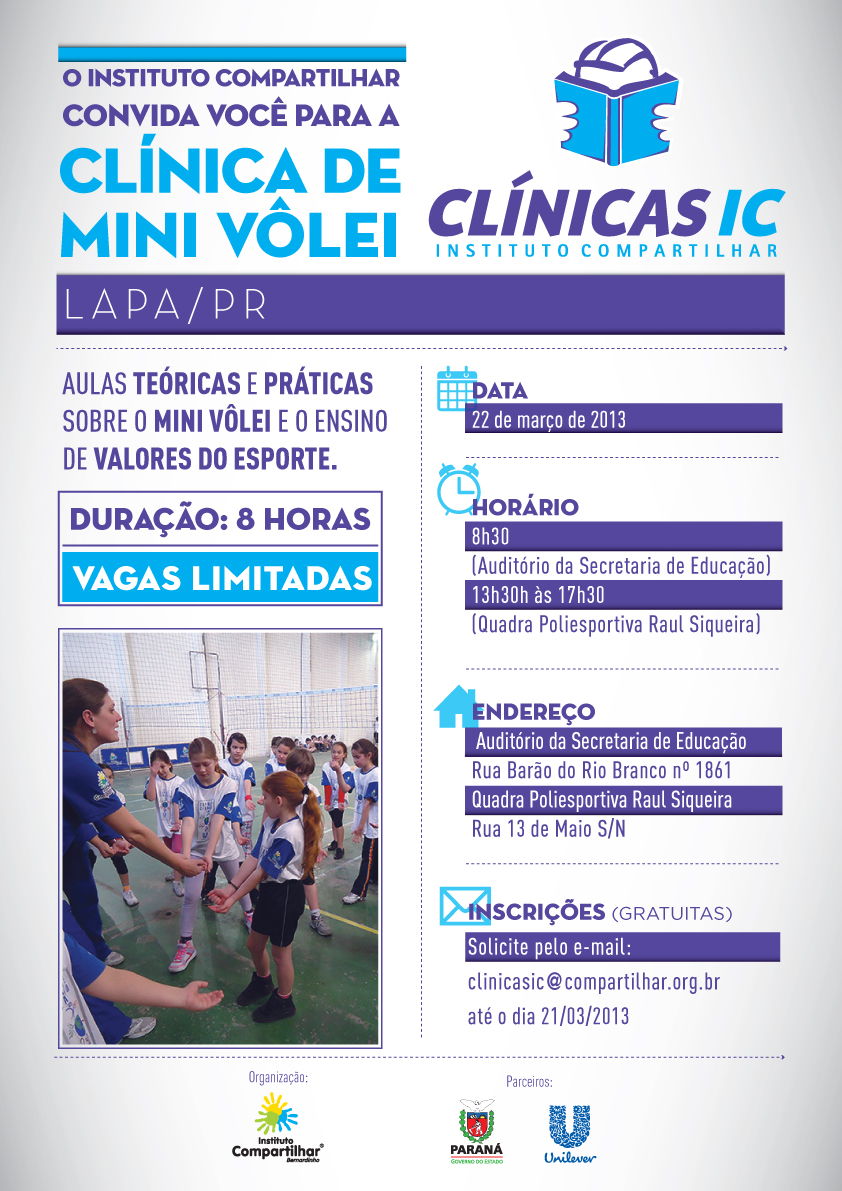
Professional and physical education academics have the opportunity to know the Methodology Share Initiation Volleyball to. Coordinators of the Institute Share hold the IC Mini Volleyball Clinic in Lapa / PR, on 22 March. The IC clinics aim to disseminate technical foundations of the methodology and the teaching of values, such as cooperation, responsibility, respect and autonomy.

Professional Institute Share teaches practical class in IC Clinic last year.

The meeting, which will be first held in the city, will last 8 hours, between practical and theoretical classes. Registration is free, they must be requested by e-mail ( clinicasic@compartilhar.org.br ) and can be held until the 21st of March. Those interested should f

attentive icar, as space is limited. Classes will begin on Friday morning at 8:30 am in the Auditorium of the Department of Education, located in the Baron of Rio Branco Street, No. 1861. From 13:30 until 17h30 the course will take place at Poliesportiva court Raul Siqueira, located on 13th Street of May.

Photos: IC Disclosure Archive

Guga Kuerten Institute Share Institute visit to exchange experiences

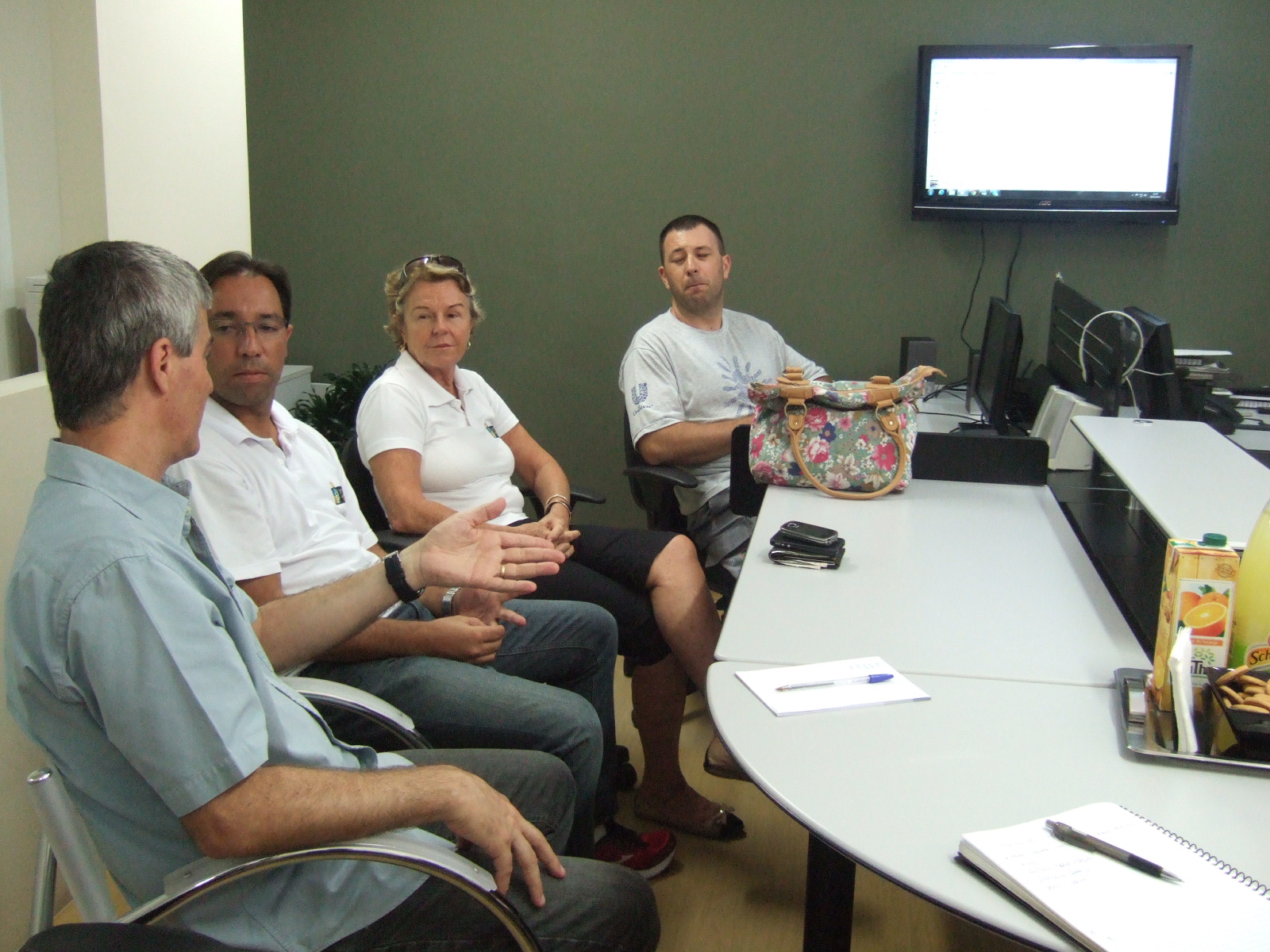
In the administrative office, Share Institute Guga Kuerten Institute and exchange experiences.

On Wednesday, February 20, the Post Office received, in Curitiba / PR, the visit of five members of the Guga Kuerten Institute staff (IGK), including President Alice Kuerten, for a chat and exchange experiences on projects social sports developed by the two institutions.

In the morning, the coordinators Share received all the administrative office to ask questions, talk about teaching methodology and partnerships with the public sector. For the sports coordinator of IGK, Marcelo Lima, work the similarities of the two institutions encouraged them to want to know closely and discuss difficulties and opportunities. "There's always a lot to learn, and the Institute Share can add in a lot of luggage and experience," he says.

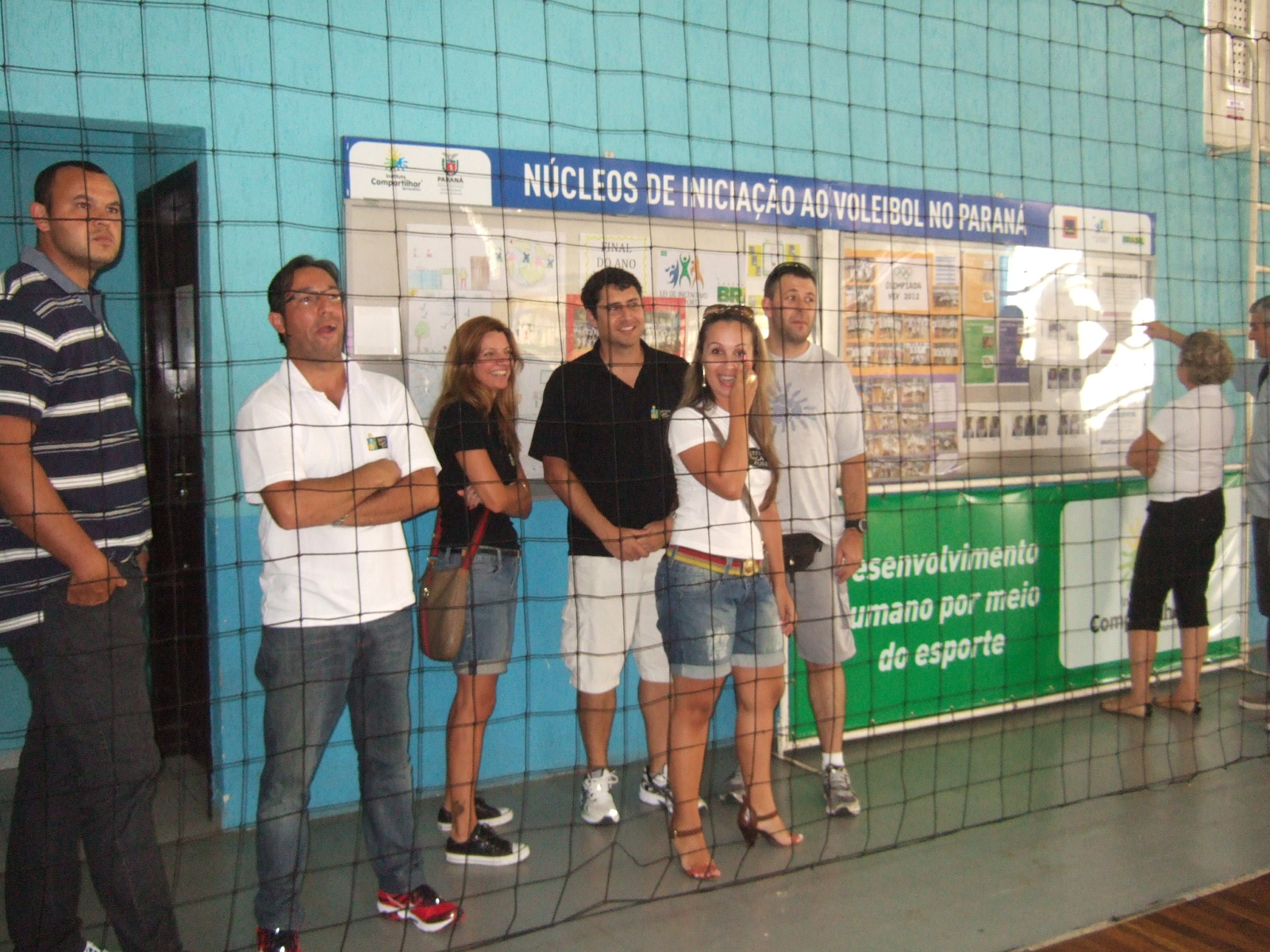
Coordinators of the Instituto Guga Kuerten observe the design classes at the Initiation Volleyball Nuclei.

To see in practice how the classes are held, the Institute led to the Share Start Centers project to Volleyball in Paraná to watch the activities and know the application of the values ​​in each category. "Certainly much of what we saw today will give us experience to apply to our projects there," says Marcelo.

Always in search of new information, Alice Kuerten explains that the fact of the Institute Share contraturno work on and within the public school, approaching the realities of institutions. "We wanted to share some of our objectives and activities with Share Institute and also spend some of our experiences. These discussions are always very important for both institutions, "he said.

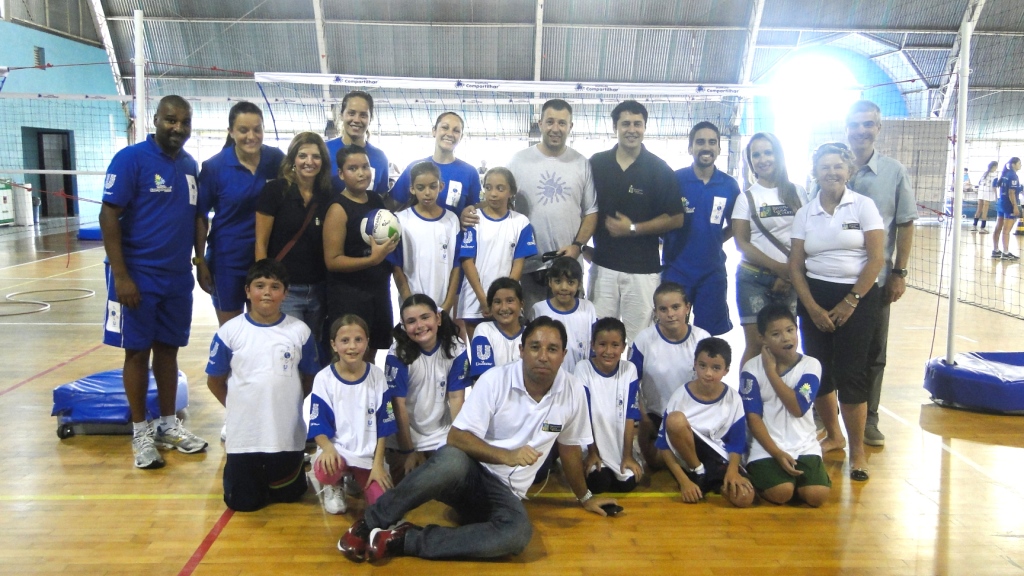
Students Category Mini 2x2, teachers and engineers gathered for a photo.

The Guga Kuerten Institute, created in 2000, and its mission is to coordinate, promote and support actions aimed at providing development opportunities and social integration for all citizens, seeking to strengthen the culture of solidarity among the members of our society. On two fronts: sport and people with disabilities, work has focused exclusively in the state of Santa Catarina.

Learn more about the Institute Guga Kuerten in: www.igk.org.br

Photos: IC Disclosure

Socioesportivo program of the Institute Share Back to activities

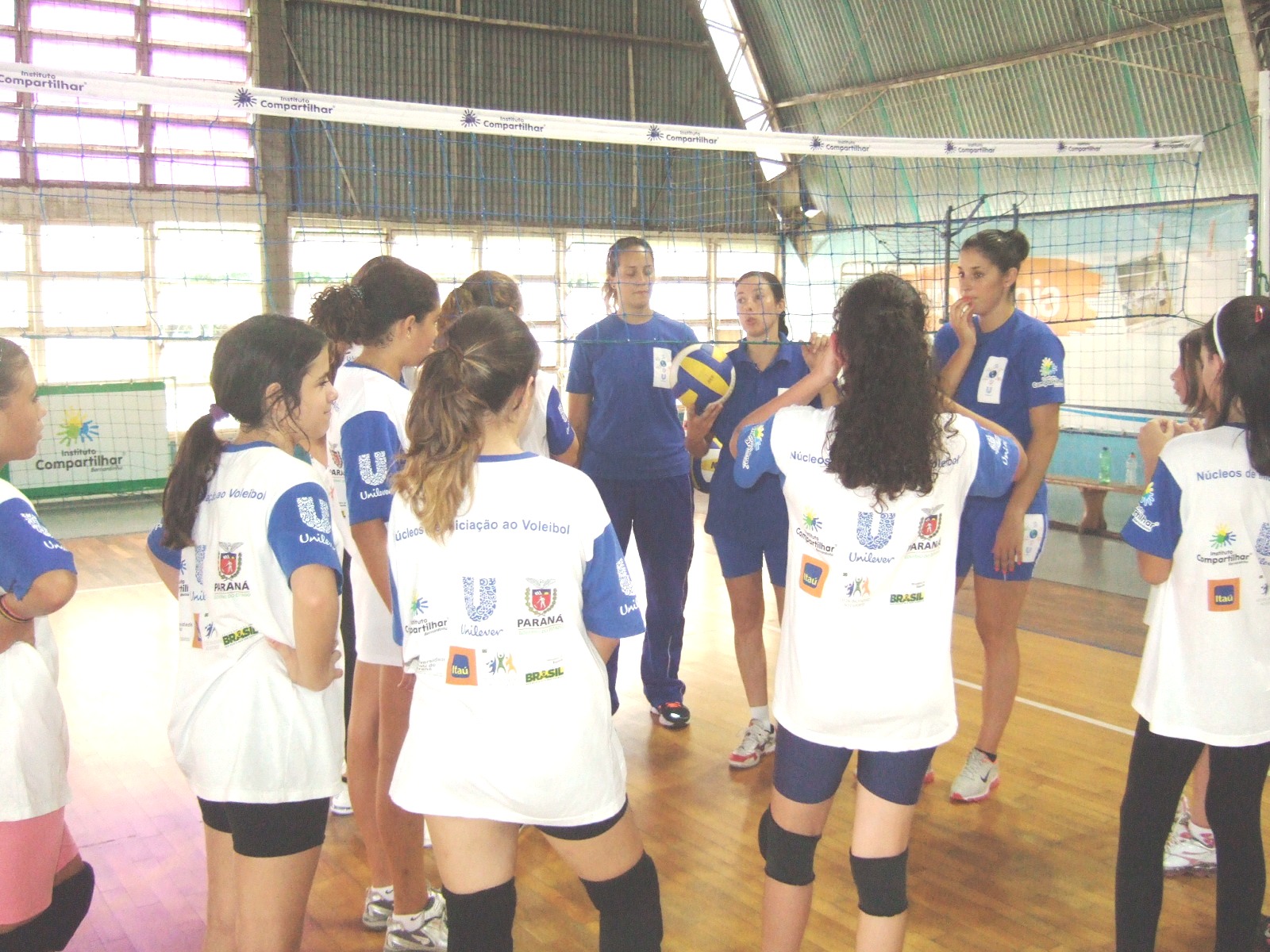
Rosana Roberta teacher (with the ball in hand) explains to students about the changes the new category.

Anxiety for the start of minivôlei classes in three cores has been surpassed by children and adolescents from Central cores - Curitiba / PR Initiation Centers project to Volleyball in Paraná, Natal / RN project Volleyball Network and Forte do Leme - Rio / Project RJ Sport in Action. Other centers are awaiting the release of the municipalities to begin the process of registration and enrollment renewals.

In the Central Core in Curitiba, the number of re-enrollments reached 374, leaving only 220 places for new students. For Rosana Roberta teacher, this demand earlier in the year is a reflection of their work. "Many students returned the preset period, which shows that they are more responsible and involved. This proves a taste for the sport and the pleasure of being the project. Remembering that our tailored methodology influences a lot, "he says. The pedagogical coordinator of the project Nuclei Initiation Volleyball warned: "programmed some internal events and larger ones to be developed with social organizations working sport".

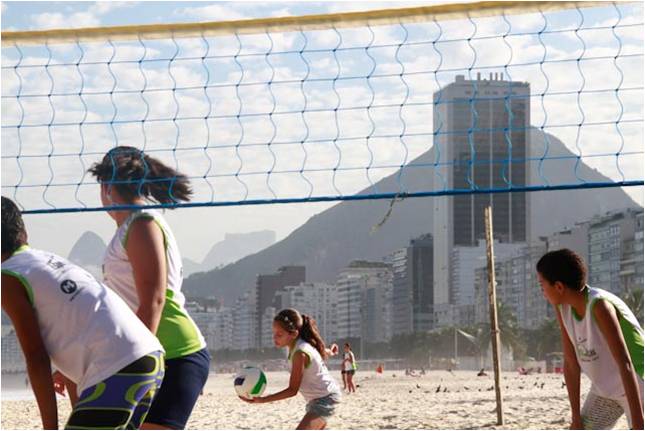
Lessons on the beach of Leme Fort Core attract more children.

Already in Rio de Janeiro, the Leme Fort Core recovery slower, as students take to search the project, even if the school classes have already returned. Teachers and coordination begin to disseminate lessons next week to fill the job openings. The schedule of events is already closed and the party "Action Family" that brings together parents and students on values ​​activities will happen again this year, because the success of the previous year.

Tournament held in 2012 at the Center Natal motivates students to continue the activities in 2013.

Volleyball net on the project, the only core that started the class was Christmas Core / RN and there activities have started well. Two classes of category Mini 4 × 4 (13 years) were opened, one in each shift, moreover, even if the classes in the city have not begun, students have sought the project and are in full swing. Demand for places is higher than expected.

For the student category Volleyball, Lucas Funaki, Project Initiation Volleyball Nuclei to the prospect of the year is: "the further development of my and my friends to enhance the quality of lessons and also increase the number of boys in our class to that lessons become more dynamic, "expect the student who is on the project for four years. "I want to learn more about the value of autonomy which is the category that I am," he adds.

Project partners Nuclei Initiation Volleyball in Parana to:
State Government of Paraná and Unilever. Via Sports Incentive Law: Unilever, Itaú and Sports Ministry.

Partners Leme Fort Core:
Brazilian Army (Personnel Studies Center) and Sextant publisher.

Core partners Christmas / RN:
Christmas Town Hall, Christmas Volley Club, Integrated Education and University Potiguar.

Photos: IC Disclosure

Physical education teachers of the Municipal Net of Rio de Janeiro know the methodology of the Institute Share

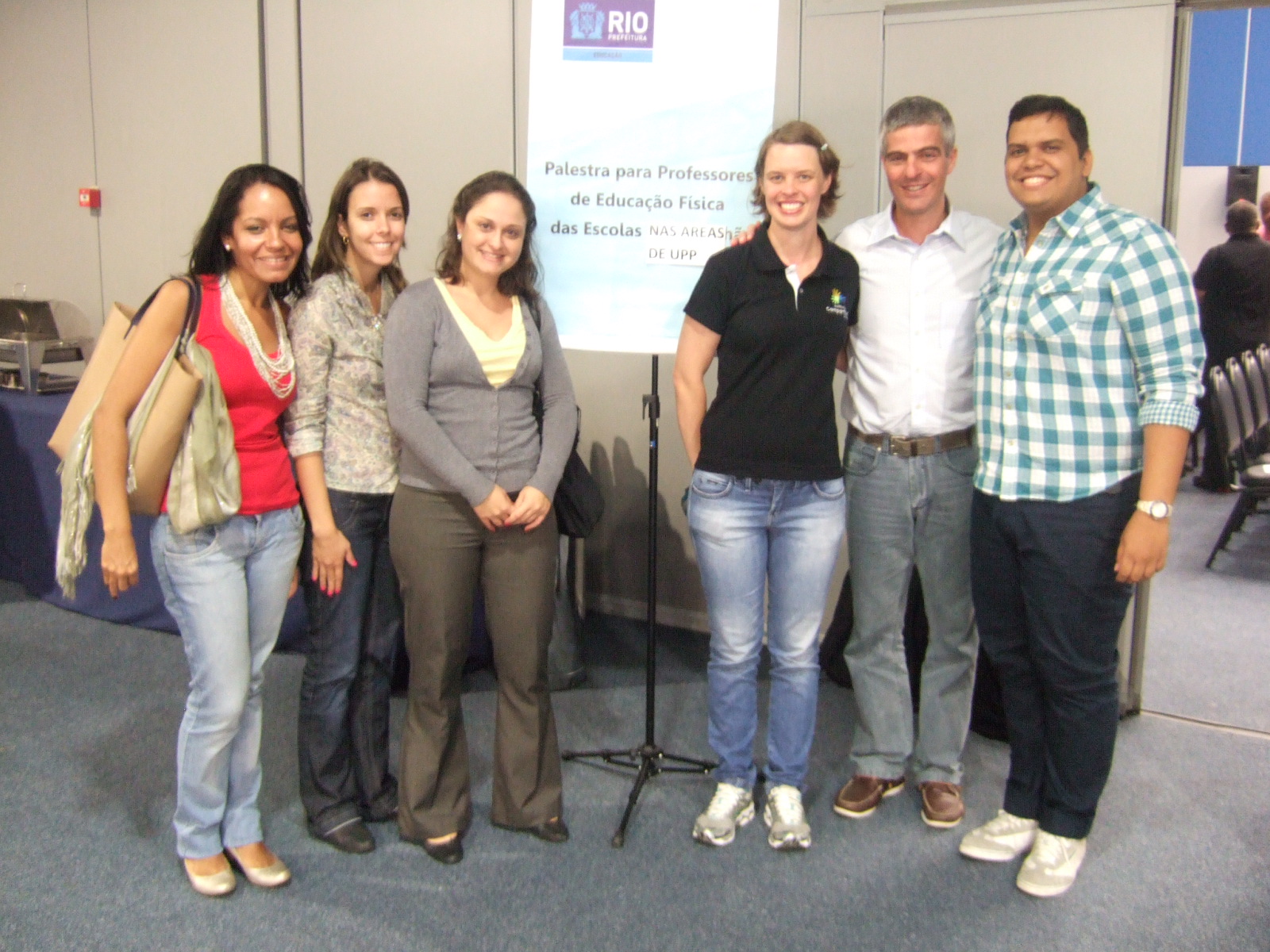
Rafaela Selem, IPP, alongside Luiz Fernando Nascimento Share Institute.

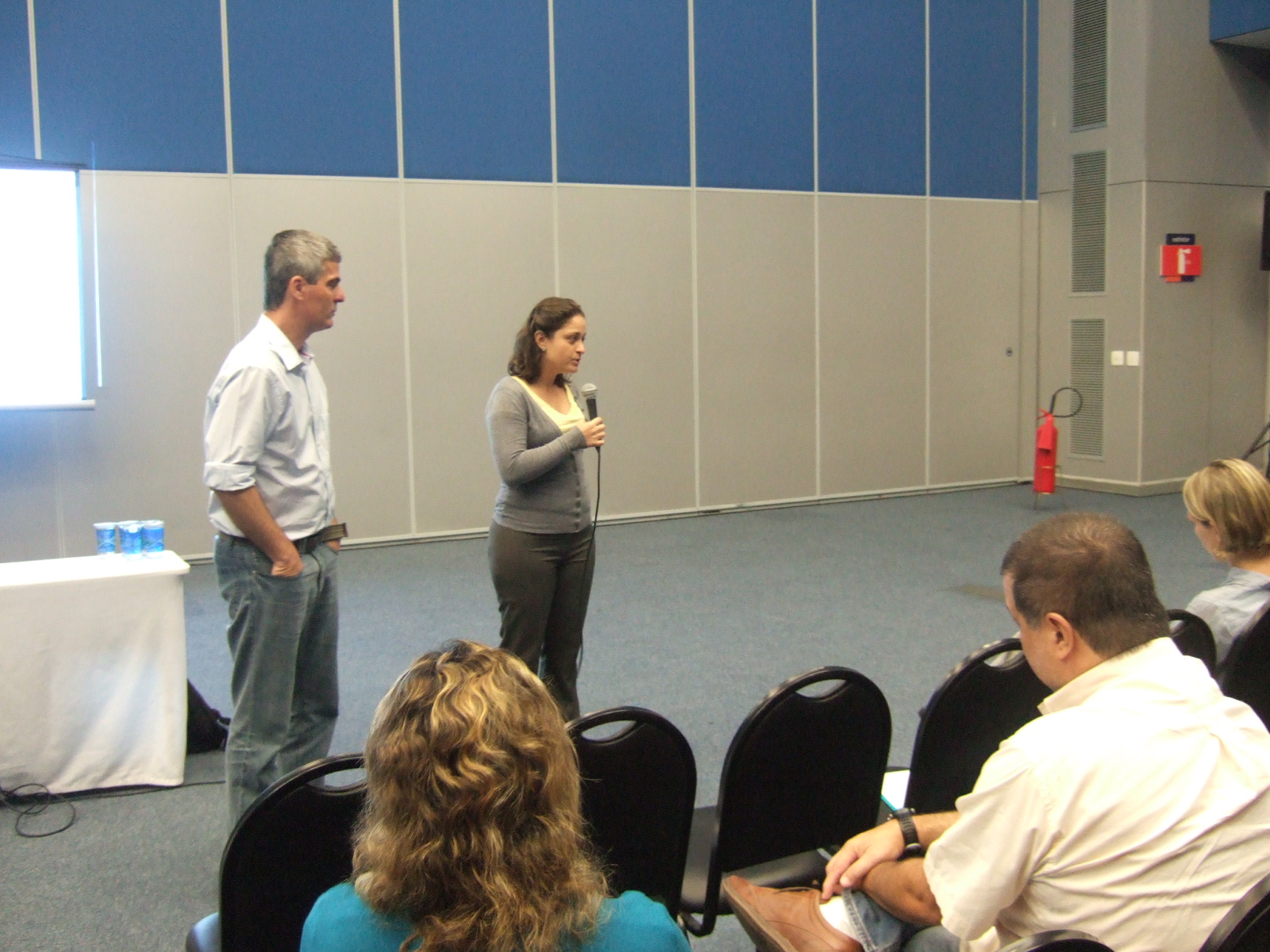
On the agreement reached with the City of Rio de Janeiro City Hall, when the Rio / RJ Nuclei were deployed in the city, it was established that the Institute would spread Share your methodology lesson to other physical education teachers of Municipal Education Network. This year the course took place on February 6 in South America Convention Center and brought together about 100 professionals from nearby schools to Pacifying Police Units - UPP.

The meeting was mediated by Pereira Passos Institute (IPP) that he intended to present the proposal for a new physical education syllabus in pacified areas. The initiative, which aims to plan in an integrated way a more efficient sports policy for these areas, is a partnership between the IPP, which coordinates the Social UPP program with the City Department of Education. Share The Institute was invited to present the Methodology Share Initiation Volleyball, development, incorporating principles and values ​​in sports activities.

Team IPP and Institute Share in training teachers of the Municipal Net of Rio de Janeiro Education.

Eduarda La Rocque to, the IPP president, sport for development is a main focus of activity of the Institute. "I see the sport as a powerful social integration tool and I believe that a strong relationship between the government and civil society will generate good projects and expand the promotion of sports activities in these areas," he says.

Source: http://www.rio.rj.gov.br/web/ipp/exibeconteudo?article-id=3593506

Photos: IC Disclosure

Improvement methodology is presented to teachers Nuclei Rio / RJ

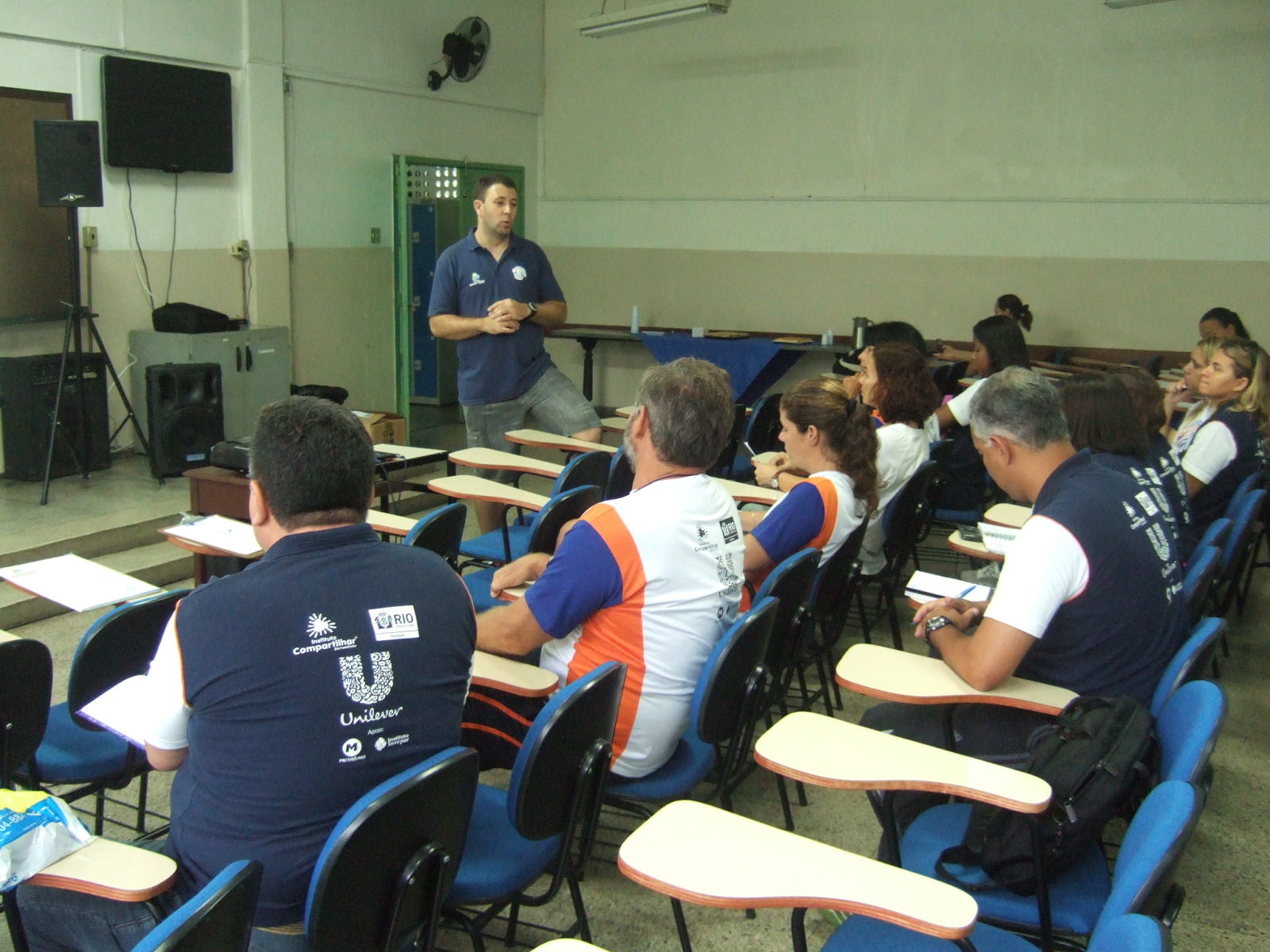
Vinicius Petrunko, pedagogical coordinator, answers questions from teachers.

The ten teachers Nuclei Rio / RJ project Volleyball Network came together with the coordinators of the Institute for the improvement of Share Share Initiation Method to Volleyball. The meeting took place at the Municipal School of Fonseca Orsina on 5 and 6 February.

During the meeting, the teachers had access to the results of the Monitoring and Evaluation System - Simac - 2012 which gathers information such as occupancy rates of vacancies, hours of use, often the activities and evasion. The goal was to present the points to be worked on and improved for the year that begins. For the coordinator Ana Elisa Caron, the meeting early in the year is very positive for the teachers since the start motivated classes.

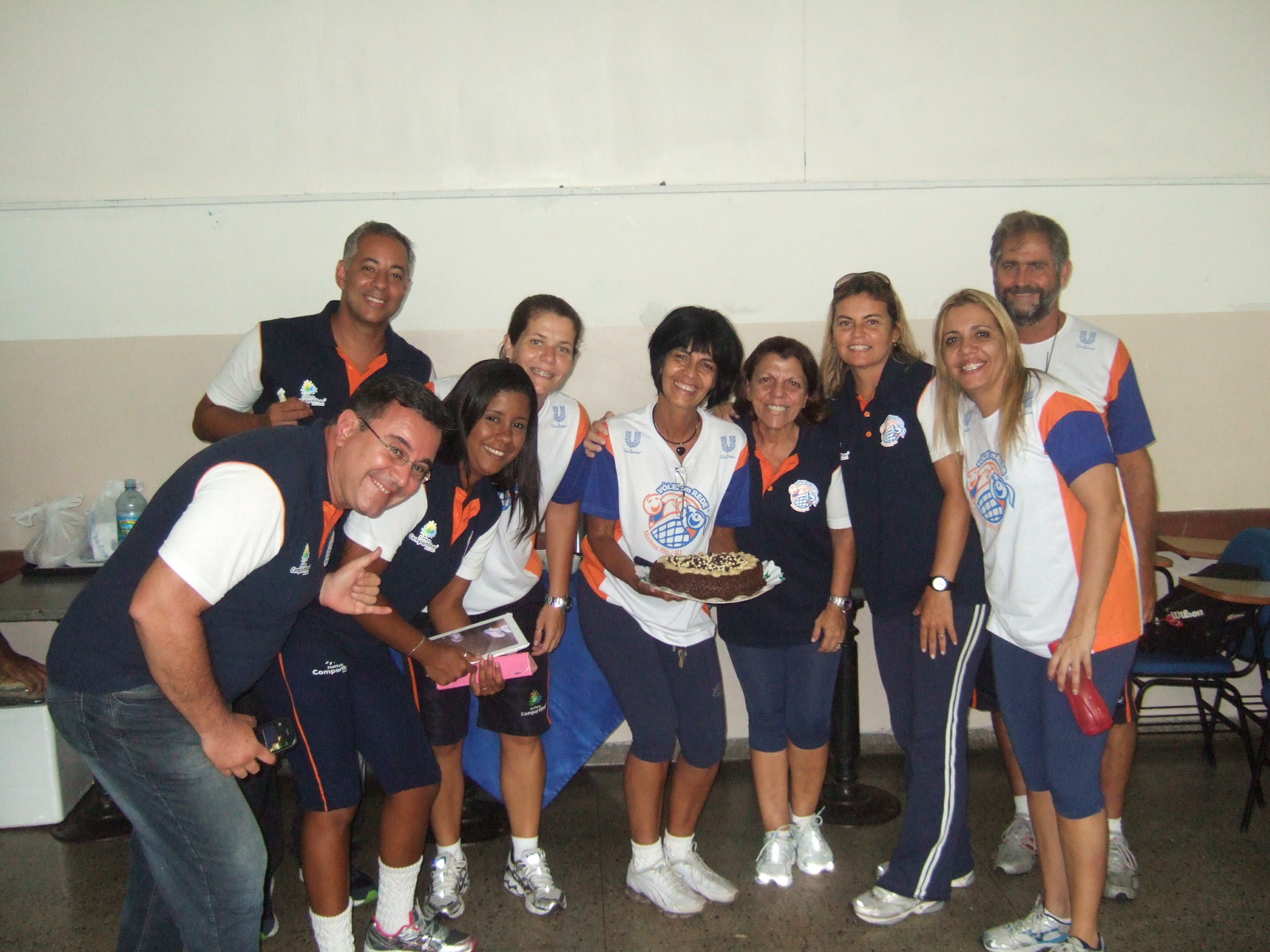
Together, teachers celebrate birthday Rosane Muricy, a professor of the Center Higienópolis.

Furthermore, there was presentation of some structural changes in the 2013 planning documents and answering questions on the methodology. On Wednesday morning, the teachers created class problem situations so that everyone could discuss and propose a solution. "Finding teachers together is always positive because we can improve the methodology, key points and principles," says Ana Elisa. A novelty was the entrance of Professor Irlene Cantuaria who will start their classes this year at the Center Bonsucesso replacing Professor Casimir Neto.

Partners of the ten Nuclei Rio / RJ project Volleyball Network:
Municipality of Rio de Janeiro and Unilever, with MetrôRio support with Institute Invepar.

Photos: IC Disclosure