


Of cores socioesportivo program of the Institute Share, 75% happen within the public schools chosen by the local Department of Education. Thus, there is the value of the school as a pleasant place to be and create the link with formal education. Sports activities are held in contraturno and in addition to learning volleyball, students practice values such as cooperation, responsibility, respect, autonomy, and self-esteem and resilience, which are valid for a lifetime. Check out this article about activities in contraturno published in the journal New School in 2009.
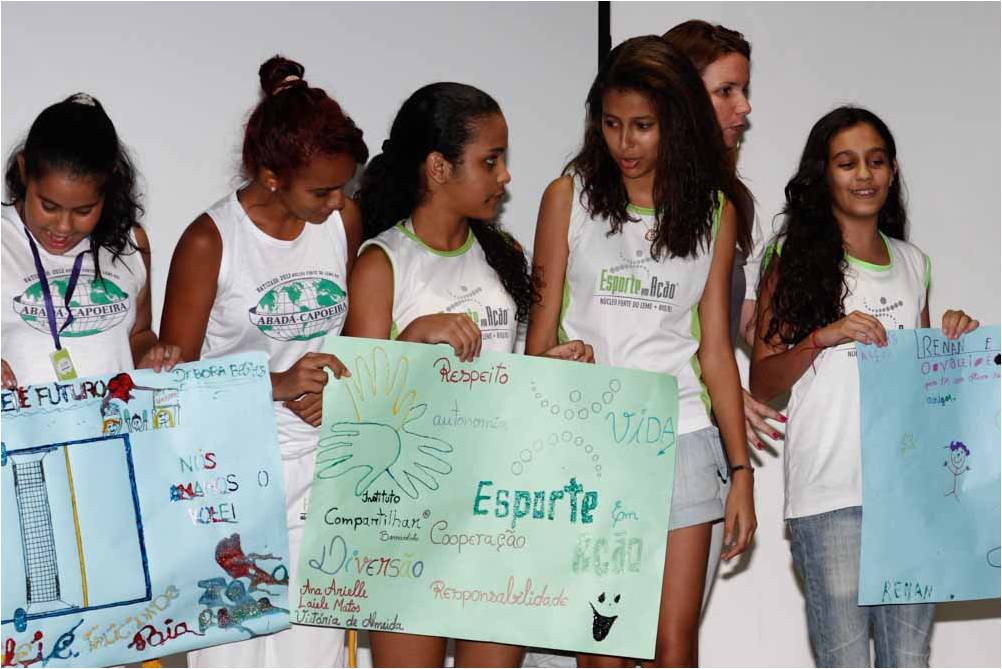
In the closing party of Leme Fort Core in 2012, volleyball and capoeira students show work on values.
Brazilian children do not spend on average more than four hours a day in elementary school units, according to a survey of the Getúlio Vargas Foundation (FGV) released in April 2009. It is little. And the very Law of Directives and Bases of National Education (LDB) calls for the extension of that time.
To reverse the situation, experiences to extend the period begin to appear in the country. These are projects that integrate activities at the school turn to fatten the workload of students, which can reach up to eight hours.
In some cases, the teacher believes in the division of disciplines and workshops grid. But usually, the decision is up to each Department of Education. "Overall, there is the overvaluation of the freest tasks such as workshops, plays and shares with the community. They are important, but not everything, "explains Maria do Carmo Brant Carvalho, general coordinator of the Center for Studies and Research in Education, Culture and Community Action (Cenpec) in São Paulo. As for the classes related to the curriculum, essential to complement the studies, are in the background, with no connection to the turn.
Who serves on contraturno care must be taken to avoid such problems and have good performance. "The first step is to seek the pedagogical coordinator or the teacher's shift responsibility for the matter to be treated in class to discuss possible approaches," says Ersilia Angeli, Professor, Department of Education of the State University of Ponta Grossa (UEPG) and studious theme.
Integration of shifts, but no dependence
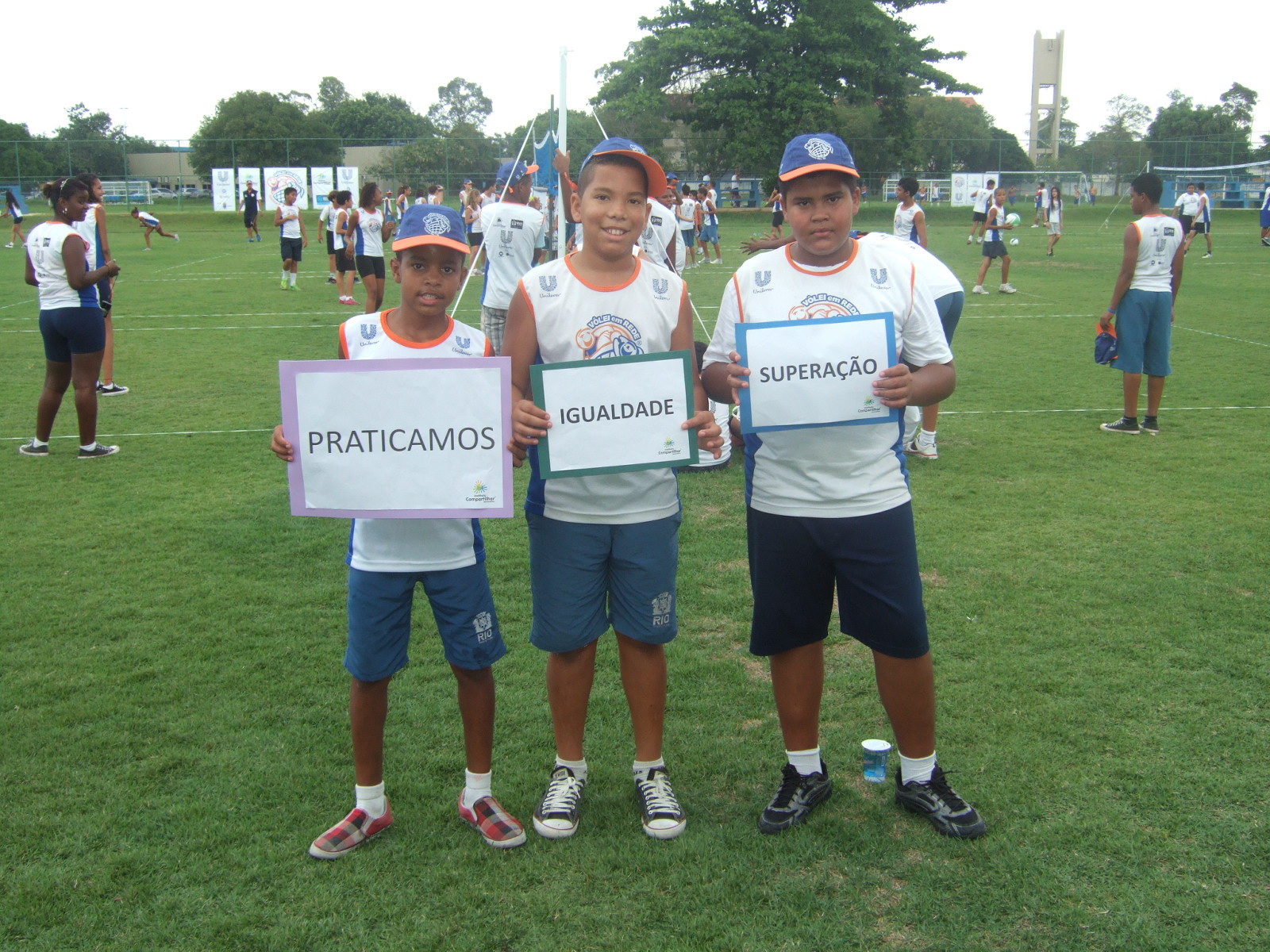
Workshop held at the Volleyball Network project of the event, Rio Nuclei / RJ encourage students to form sentences with the learned values.
Even when the dialogue is not possible, it is up to the teacher take care to unite the morning and afternoon stages and based on curriculum content, assemble productive work. One idea is to use diverse approaches to address the necessary issues.
The history teacher Wilma Fontana de Souza, the EC João Bettega, in Curitiba, put the suggestions into practice. With the help of co-ordination, set up with the 7th and 8th grade classes of a project on regional culture, complementing the work in turn. In the morning, students learned about the Portuguese influences. In the afternoon they experienced with Wilma as it resulted in the Brazilian way of life, learning to dance the fandango - regional dance brought by settlers, little known to the students and incorporated into the Paraná culture.
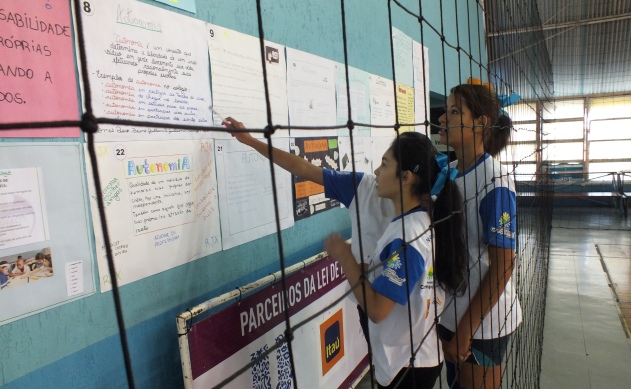
Students category Volleyball, Central Core - Curitiba / PR show activities on autonomy.
The project was approved by the government that assesses activities proposed by educators for contraturno and classifies them according to three areas: scientific-cultural and expressive-body, as well as integration between community and school.
This integration should contaminate all disciplines. In PFIC Frei Veloso, in Rio de Janeiro, the teacher of Physical Education Catarina Ferreira works body awareness with students of the 1st and 2nd series. She performs in turn, circuits with tires, bows and balls for exercise coordination. In contraturno, investment in activities such as games in which children hear songs that call for certain movements, complementing the work.
Alternatively, freer tasks are indicated. In João Bettega, the teacher of Portuguese Roseli Albini Petersen weekly promotes Discussion Forum activity, where students and parents discuss topics such as violence. "Family involvement improves learning," says Maria Salete Silva, the UN Children's Fund (UNICEF) in Brazil.
Source Text: New Magazine School
Available in: < http://revistaescola.abril.com.br/planejamento-e-avaliacao/planejamento/turno-contraturno-escola-476470.shtml >
Photos: IC Archive 2012


